
The End of an Era: the Death of Patriarch Ilia II and What Comes Next
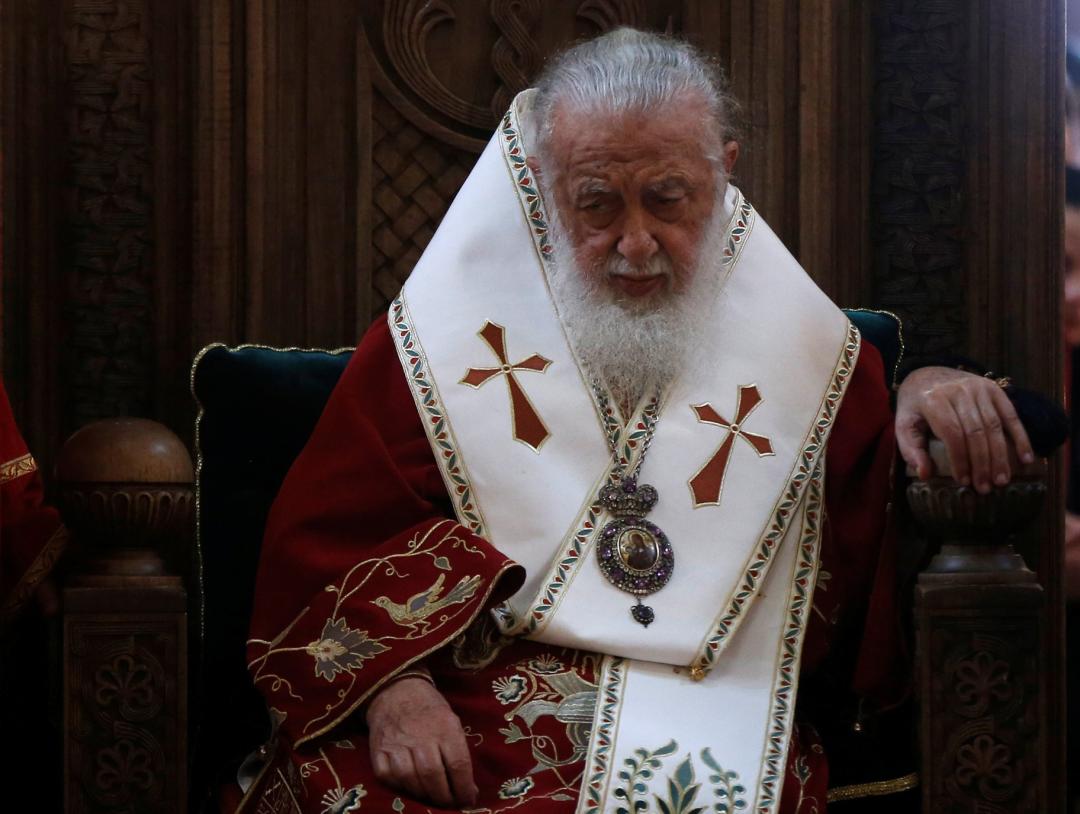
On the morning of March 17, 2026, Catholicos-Patriarch of All Georgia Ilia II was admitted to a Tbilisi medical center in critical condition following massive gastric bleeding. Within hours, Metropolitan Shio Mujiri, the Church's interim leader and locum tenens, appeared before cameras at the Caucasus Medical Center and announced the news in a voice barely steady enough to carry the weight of what he was saying. "A few minutes ago, His Holiness and Beatitude, Ilia II, passed away. He was an epochal man." The silence that followed spread across a country that had known no other spiritual father for nearly half a century.
Georgia went into national mourning. Flags were lowered at public buildings. The majority of public services were suspended, then made free. And over the following days, something remarkable happened: a deeply divided society came briefly, visibly, and genuinely together. Ordinary Georgians stood in queues for up to twelve hours in the cold to pass by the open casket at the Holy Trinity Cathedral in Tbilisi. By most estimates, well over a million people participated in the farewell across the city's streets and churches, and it said something about both the man and the institution he had shaped over forty-nine years.
As with any moment of profound national significance in Georgia, the occasion was not immune to the pull of politics. Various figures and interests sought proximity to the grief, using the moment for legitimation or symbolic dividends. The funeral of a man revered precisely for standing above the fray became, in some of its details, a reminder of why that standing had always been so rare and so difficult to sustain.
The procession that carried the Patriarch from Sameba to his final resting place at Sioni Cathedral in the Old Town was itself a striking tableau. Soldiers, police, public servants, and first responders lined the route, standing at attention and holding Georgian flags as the coffin passed. Funeral bells rang simultaneously in every operating church across the country. It was a state farewell in the fullest sense, a recognition that whatever else the Church had been under Ilia II, it had become inseparable from Georgia's national idea of itself.
A Church Rebuilt from Ruin
To understand what Georgia lost on March 17, it is worth recalling the historical context of what the Georgian Orthodox Church looked like when Ilia II took the throne on December 25, 1977. Decades of Soviet atheist policy had reduced one of the world's oldest Christian institutions to a marginal presence. There were thirty-four active churches in the entire country. The number of ordained clergy could be counted in the dozens. Theological education had been gutted. The Church existed, barely, as a limited and managed relic of pre-Soviet life.
Ilia II was forty-three years old when he was elected the 141st Catholicos-Patriarch of All Georgia. He arrived with a formation shaped by the Moscow Theological Seminary and Academy, where he had studied through the late 1950s, and with a bishop's experience that had taken him through Batumi and the contested diocese of Sukhumi and Abkhazia. His early tenure was defined less by theological vision than by organizational will: rebuilding parishes, ordaining clergy, reopening monasteries, and re-establishing the Church as a visible presence and gravitation in Georgian public life. The number of dioceses grew from fifteen to thirty-three. More than fifty monasteries were founded or restored. Hundreds of clergy were ordained. The Mtskheta Theological Seminary was relocated to Tbilisi and elevated into a full theological academy. A modern Georgian-language Bible was published. The Church's administrative infrastructure, which had been hollowed out, was rebuilt almost entirely from the ground up. The landmark Holy Trinity Cathedral, Sameba, rose over Tbilisi as the largest church in the country and a powerful assertion of the institution's renewed centrality in national life.
In 1990, Ilia II secured recognition of the Georgian Church's autocephaly from the Ecumenical Patriarchate of Constantinople, formally completing a decades-long effort to establish the Church's full canonical independence. It was one of the defining achievements of his tenure, and it cemented his standing not just domestically but across the Orthodox world.
His personal initiatives extended well beyond institution-building. His call for Georgian families to have more children, backed by his personal commitment to serve as godfather to every third child and beyond, became one of the most discussed population interventions in the post-Soviet space. With that, birth rates among Orthodox women within marriage had risen by forty-two percent, with third births doubling over the same period. He is estimated to have personally baptized more than 47,000 children.
The Symbolic Father of a Nation
What Ilia II built was not only a functioning church. He built something harder to quantify or measure and historically more consequential: a national symbol.
In a country where political life was synonymous with division, instability, and, in several periods, outright violence, the Church under Ilia II became a place of unity. He functioned, in a phrase that has gained currency since his death, like a constitutional monarch: his direct commands were rarely followed literally, but his spiritual and religious authority was widely recognized across political lines. He mediated between warring factions during the civil strife of the early 1990s. He stood among the crowd in April 1989 when Soviet troops moved against pro-independence demonstrators in Tbilisi, imploring people to seek shelter in a nearby church. He maintained relations with the Russian Orthodox Church even after Russia's 2008 invasion of Georgia, not out of political sympathy, but because he calculated that breaking communion would cost Georgia the Church's standing in the breakaway regions of South Ossetia and Abkhazia.
For most Georgians, the Church under his pragmatic long-term leadership was primarily a national institution and only secondarily a religious one. The parish, in the strictly observant sense, remained a minority. But the authority of the Church, and above all of the Patriarch personally, reached far beyond the practicing faithful. He was consistently the most trusted public figure in Georgia across decades of polling, outranking every politician, every official, every public intellectual. This level of trust was not simply institutional loyalty. It was a reflection of the fact that in a country where public life often generated cynicism, Ilia II represented something that felt permanent and untainted. The formal basis for the Church's role was enshrined in a 2002 concordat signed with then-President Eduard Shevardnadze, granting the Church a consultative role in policymaking alongside significant tax exemptions, state financing, and ownership rights over land and property. But the informal basis was harder to codify; it was the accumulated moral weight of an epochal man who had been present through every crisis of Georgian modern life and had not visibly broken.
Any honest account of the Ilia II era must also reckon with its contradictions and the questions that have been asked, with increasing openness, in the years since the Church's relationship with political power became harder to ignore. His hierarchical origins and personal background in the Soviet church hierarchy have never been entirely free of scrutiny. Then-President Shevardnadze noted in a 1997 interview that the Communist Party apparatus had played a role in clerical appointments in much the way it had with other institutional positions. Questions about the ties between the Church and the Soviet security services were never definitively resolved, though they also never resulted in any formal finding that changed Ilia II's standing.
More recently, the Church's tendency and conformal practices to align with the current ruling direction in Georgia became increasingly visible and increasingly contested. Internal documents (namely blackmailing and discrediting ‘kompromats’), allegedly leaked from the state security services in 2021, described deep and sometimes disturbing details of life within the Church's hierarchy, including allegations of corruption, personal impropriety, and surveillance of clergy by state agencies. The Church disputed much of the material as fabricated or selectively assembled. But the leaks landed in a changed public environment, producing mixed perceptions and growing negative sentiments. By the early 2020s, criticism of the Church, once a genuinely taboo subject for many years, was no longer unthinkable, nor was the possibility of an orchestrated opposition.
Within the Church itself, the final years of Ilia II's life saw internal tensions surface more openly. His declining health meant that others increasingly exercised functions in his name, and disputes over who held actual influence in the Patriarchate revealed in ways they had not been before. Within the synod, religious authorities with different political sympathies, institutional loyalties, and visions for the Church's future had gradually coalesced into informal groupings and hierarchies. Some leaned toward the ecclesiastical and political establishment, others toward reform or greater independence from state influence. These currents and distorted status quo became harder to contain, and by the end, some clergy had broken openly with the leadership around the locum tenens, with consequences that followed.
The pressures on the Georgian Church were never purely external. Domestically, successive governments understood well what the Church represented: an institution with genuine mobilization power, deep public trust, and the ability to confer or withhold a form of legitimacy that no political process could fully replicate on its own. That understanding expressed itself in practical terms. State funding, land donations, and financial/material support for the Church grew consistently. Religious figures became a regular presence in political settings, and political figures in religious ones. The boundary between the spiritual and the governmental, never sharply drawn in Georgia's historical tradition, grew still more porous.
From the outside, the Russian Orthodox Church and the interfering interests that traveled alongside it also sought, at various points, to maintain closeness and manipulatively influence the Church's positions on questions ranging from personnel to its stance on broader Orthodox affairs. Ilia II navigated all of this without losing the one thing that made it manageable: his personal authority. His standing gave the Church a maximizing buffer that no statute or institutional arrangement could have provided on its own. Whatever approached the Patriarchate from either direction, the figure at its center remained, in the eyes of the absolute majority of Georgians, above it. That was not incidental to his legacy. It was the core of it.
The Church had reached the peak of its public authority and institutional autonomy, in the view of many, during the Saakashvili years, when it was perceived as a genuinely independent force capable of balancing the executive government with unchecked exercise of power. As the Church became more compromised and closely identified with the ruling agenda that followed, its self-sufficiency and functional independence became harder to claim. Its authority did not collapse, but it changed character. The Patriarch personally retained immense moral reverence, while the ethics of the organization and ecclesiastical elite he led became more disputed. None of this substantially diminished what ordinary Georgians felt when Ilia II died.
The Funeral and Its Tensions
Even the question of where Ilia II would be buried did not escape the clash of competing interests. By tradition and precedent, the Patriarchs of Georgia are laid to rest at Sioni Cathedral in the heart of Tbilisi's Old Town, the ancient mother church of the Georgian capital. But the question of whether Ilia II would follow that tradition or be interred at Sameba, the vast Holy Trinity Cathedral whose construction he had overseen, and which had become the symbolic seat of his patriarchate, became a matter of genuine and at times tense deliberation. Sameba carried particular associations: it had been built with significant patronage from figures connected to the current ruling establishment, and some observed that the push for burial there carried undertones beyond the purely spiritual and religious. The matter was settled within the Holy Synod by the narrowest possible margin, a single vote separating the two options, with Sioni prevailing. It was a small but telling episode.
Equally unusual was the composition of the special committee tasked with organizing and coordinating the funeral proceedings. Rather than being led primarily by religious figures, it was dominated by politicians and state officeholders, a configuration that struck many observers as inverted, the machinery of the state visibly in charge of an occasion that belonged, above all, to the Church and its faithful.
The funeral on March 22 at Sameba Cathedral brought together a diverse and ideologically layered assembly of international delegations and domestic groups that, in almost any other setting, would never have occupied the same space.
Ecumenical Patriarch Bartholomew I of Constantinople arrived from Istanbul and personally conducted the funeral rite alongside Georgian clergy. This was significant both spiritually and diplomatically. Since 2018, the Russian Orthodox Church has been in a state of broken communion with Constantinople, largely over the question of Ukrainian Orthodox autocephaly, and the Georgian Church has maintained a careful middle position: it did not recognize the new Orthodox Church of Ukraine, preserving its formal ties with Moscow, while sustaining its historically close relationship with Constantinople. Ilia II's funeral was one of those rare moments where that deliberate, delicate balancing act was directly materialized in a single room, with Bartholomew on one side of the altar and the Russian delegation present in the nave.
That Russian delegation was led by Metropolitan Veniamin of Minsk and Zaslavl, the Patriarchal Exarch of All Belarus, representing the Moscow Patriarchate at the highest level short of Patriarch Kirill himself. Accompanying him was Mikhail Shvydkoi, described as the Special Representative of the President of the Russian Federation for International Cultural Cooperation, who conveyed personal condolences from Vladimir Putin to the locum tenens and to the Georgian people. The Russian presence at the funeral was noted carefully by Georgian observers, and some drew connections between the delegation's presence and the succession question already taking shape.
The question of what Ilia II had actually expressed regarding his succession had itself become a point of clarification. The head of the Patriarchate's public relations service, Archpriest Andria Jagmaidze, confirmed that the late Patriarch had left no sealed or separate written testament beyond his 2017 appointment of Metropolitan Shio as locum tenens. Jagmaidze recounted that after that announcement, Ilia II had sat him down and dictated, on a piece of paper that the archpriest said he still possesses, exactly what should be said publicly about the appointment. The Patriarch had apparently been aware that speculation about a secret will could generate anxiety and wanted to foreclose it explicitly. His 'testament,' in effect, was the act of naming the locum tenens, not a document pointing further. And yet the question has not entirely settled. Whether any broader testament exists, whether it would ever be made public or remain confidential within the Church's inner circle, continues to circulate quietly. In the absence of certainty, politicized interpretations and rumors tend to fill the informational vacuum.
Ilia II's vision of Georgia's place in the world was rooted in a civilizational reading of the country's identity. Georgia had embraced Christianity in the fourth century, long before most of Europe, and he regarded that fact not as a historical footnote but as a living argument. In his understanding, Georgia belonged to the family of Christian nations that had built the foundations of European civilization, and its orientation toward European and Euro-Atlantic structures was not a foreign imposition or an ideological choice but a homecoming of sorts, a return to the space where Georgia had always, in the deepest sense, belonged. Alongside this, his conception of Georgian identity carried a civic dimension. The nation he spoke to and for was not defined by ethnicity alone but by shared faith, shared history, and shared belonging to a common cultural inheritance, a framework that allowed the Church to function as a genuinely unifying institution across a diverse society rather than as the instrument of any narrower identity.
A Church Without Its Center
Under the church statute adopted in 1995, the Patriarchal throne is now described in canonical language as "widowed," and the locum tenens is required to convene an expanded church council no earlier than forty days and no later than two months after the Patriarch's death to elect a successor. The council includes the full Holy Synod, clergy and lay delegates from each diocese, monastic representatives, and delegates from theological academies. Only the thirty-nine bishops of the Holy Synod, however, hold the right to vote. A candidate requires more than half of the votes cast to be elected in the first round; if no one reaches that threshold, a second round is held between the two leading candidates.
During Ilia II's tenure, the Holy Synod met on a formal basis only twice a year. This was not neglect or dysfunction. It was a demonstration that Ilia II's personal authority so thoroughly permeated the life of the institution that many decisions that would ordinarily require formal deliberation were made with his presence. The Synod existed, met, and functioned, but it operated in the shadow of a figure who transcended administrative process by the sheer weight of what he represented.
What remains is an institution facing an unusual accumulation of critical decisions. Beyond the election of the next Patriarch, there are vacant positions, unresolved appointments, and questions of internal governance that had been deferred or quietly managed under the old order. In the immediate aftermath of the death, the Synod convened to address the practical matters surrounding the burial. It then met again to begin preparing for the next formal gathering, expected after Easter, at which the process of electing the new Patriarch will formally be set in motion. For a body unaccustomed to sitting at the center of events, the months ahead represent a different kind of institutional life than most of its members have known.
The locum tenens is required to convene an expanded church council no earlier than forty days and no later than two months after the Patriarch's death to elect a successor. The council includes the full Holy Synod, clergy and lay delegates from each diocese, monastic representatives, and delegates from theological academies. Only the thirty-nine bishops of the Holy Synod, however, hold the right to vote. A candidate requires more than half of the votes cast to be elected in the first round; if no one reaches that threshold, a second round is held between the two leading candidates.
One consequence of the 1995 statute, which Ilia II himself had a role in shaping, is that it significantly narrowed the circle of decision-making compared to earlier practice. Women could vote in the 1977 election that brought Ilia II to the throne. Under the current rules, the election rests entirely with the bishops.
The Holy Synod currently comprises thirty-nine hierarchs. Of these, nine are above the age of seventy and therefore ineligible to stand as candidates. All of them, without exception, received their episcopal ranks during Ilia II's patriarchate. The institution has, in a deep structural sense, no generation of bishops formed under anyone other than the man it has just lost.
The field of potential candidates is wide in formal terms but narrower in practice. Several names have circulated, and among those who have observed the Church closely, one distinction carries particular weight: the diamond-encrusted skufia. The skufia is the liturgical skullcap worn by clergy. The right to wear one adorned with diamonds is the highest personal distinction a Patriarch can confer on a hierarch, and Ilia II granted it to exactly four men across his entire tenure. That number speaks for itself. The four recipients are Metropolitan Shio of Senaki and Chkhorotsku, Metropolitan Abraam of Western Europe, Metropolitan Danel of Chiatura and Sachkhere, and Metropolitan Isaia of Tskhinvali and Nikozi. Whatever formal authority or procedural advantage this distinction does or does not confer, it represents the clearest available expression of the late Patriarch's personal trust and esteem.
Of the four, Metropolitan Shio is the most prominent candidate by any external measure. He has served as locum tenens since 2017, has built significant organizational structures within the Patriarchate over that period, and is known for his close ties with the current ruling elite in Georgia. He trained in Russia, served as rector of a Georgian church in Moscow for several years, and has been described by observers as both predictable and ideologically consistent in his conservatism. His critics, including within the Church itself, point to what they see as a lack of the diplomatic temperament that Ilia II possessed in abundance, and the leaked security documents from 2021, whose authenticity was disputed, included characterizations of his leadership style that were not flattering. Whether Shio has secured the twenty votes needed among the Synod's bishops remains genuinely unclear.
Metropolitan Abraam of Garmelia, who serves Western Europe, is the most internationally connected of the four skufia holders. He is seventy-eight years old, which places him at the outer edge of canonical eligibility, and his advanced age makes him a less likely long-term candidate than a transitional one. Metropolitan Isaia of Tskhinvali and Nikozi, who leads the diocese that encompasses the conflict-affected region bordering South Ossetia, lacks theological education in the formal sense required by the 1995 statute, which also complicates his candidacy. Metropolitan Danel of Chiatura and Sachkhere, quieter in public life than the others, shared his education at the Zagorsk Theological Academy with Shio Mujiri himself, and has been watched closely by those trying to read signals from within the Synod.
Beyond the four skufia holders, other names are in circulation. Metropolitan Grigol Berbichashvili of Poti and Khobi and Metropolitan Job Akiashvili have both been mentioned as potential candidates, and Akiashvili in particular is said to have the quiet support of a meaningful cluster of bishops who began their clerical paths under his guidance. The Holy Synod contains bishops with quite different orientations, and most of them have had years, during Ilia II's long decline, to form their own views about what comes next.
The succession has also attracted external attention that some in Georgia find uncomfortable. Russian intelligence services issued public statements in late March alleging that the Ecumenical Patriarchate of Constantinople was seeking to influence the outcome by backing certain candidates. These claims, originating from Moscow, should be read in the context of the broader contestation over Orthodox jurisdiction that has characterized the past decade. At the same time, the presence of Bartholomew at the funeral and the active attention of multiple parties to the outcome of the election reflect a real geopolitical dimension that the Georgian Church cannot pretend does not exist.
At least one senior hierarch, in the hours after Ilia II's death, was direct about a different kind of pressure. Metropolitan Zenon Iarajuli publicly called on the state authorities not to interfere, directly or indirectly, in the election process. He framed it as a canonical principle. The public call was notable precisely because it acknowledged an anxiety that has circulated in Georgian ecclesiastical politics for years: that the resources of the state could be used to shape the choices of individual bishops.
In the days following the death, voices from outside the Church were already publicly declaring the election effectively decided, calling on other candidates to step aside and framing any resistance as a form of betrayal. Media outlets and public figures with visible affiliations to the ruling establishment ran coordinated messaging around a preferred outcome, part of a broader information environment in which the line between organic public opinion and directed narrative was not always easy to locate. Whether such pressure translates into the closed deliberations of the Synod is impossible to know from the outside. What is clear is that the election of Georgia's next Patriarch is taking place in a landscape where the boundary between spiritual discernment and political interest is, as it has often been in this country's history, difficult to draw with certain clarity.
What Comes After
The death of Ilia II is, as observers close to Georgian public life have noted, the symbolic end of a particular era in the country's modern history. In 1977, he inherited a marginal institution and spent the rest of his life turning it into the dominant moral symbol of the nation. He did this through personal charisma, institutional will, and an ability to position the Church above the fractures of ordinary politics in a way that very few figures in any country manage to sustain for so long. The Church he shaped was deeply influenced by its Soviet-era formation, by conservative social currents that were sometimes at odds with broader changes in Georgian society, and by the gravitational pull of political alignment that came with the institution's own growing power. Its authority began visibly declining when it came to be seen as a partner of the government rather than an independent voice.
The man himself remained, until the end, largely above the damage that gathered around the institution. That is a tribute to something genuine and ephocal in him. The latter is also a measure of how much of what endured rested on a person rather than on structures that could survive him.
Whoever leads the Georgian Church next will be a brother chosen from among brothers, rather than a father. The centralized, almost monarchical leadership that Ilia II embodied over nearly fifty years was shaped by one man's singular authority. What Georgia's next Patriarch does with that inheritance, and what kind of institution he chooses to lead, will shape not only the Church but much of the country's cultural and political life in the years ahead.
Contributed by Luka Okropirashvili for Caucasus Watch