
Displaced Lives: Uncertainty over Citizenship and Electoral Choice Looms Large over Karabakh Armenians
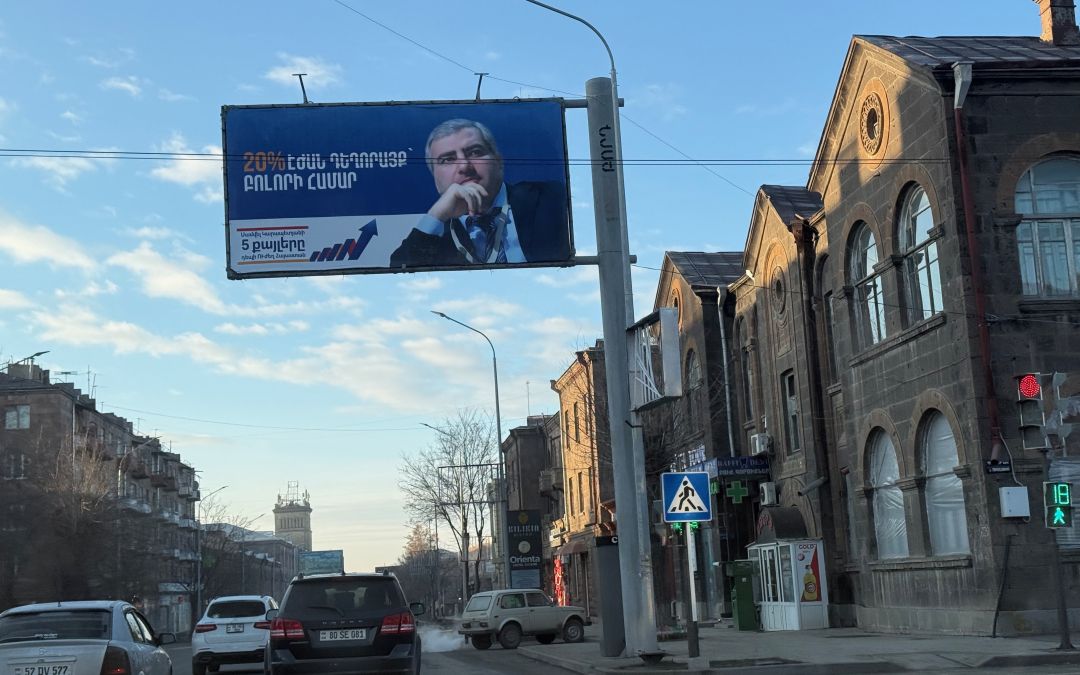
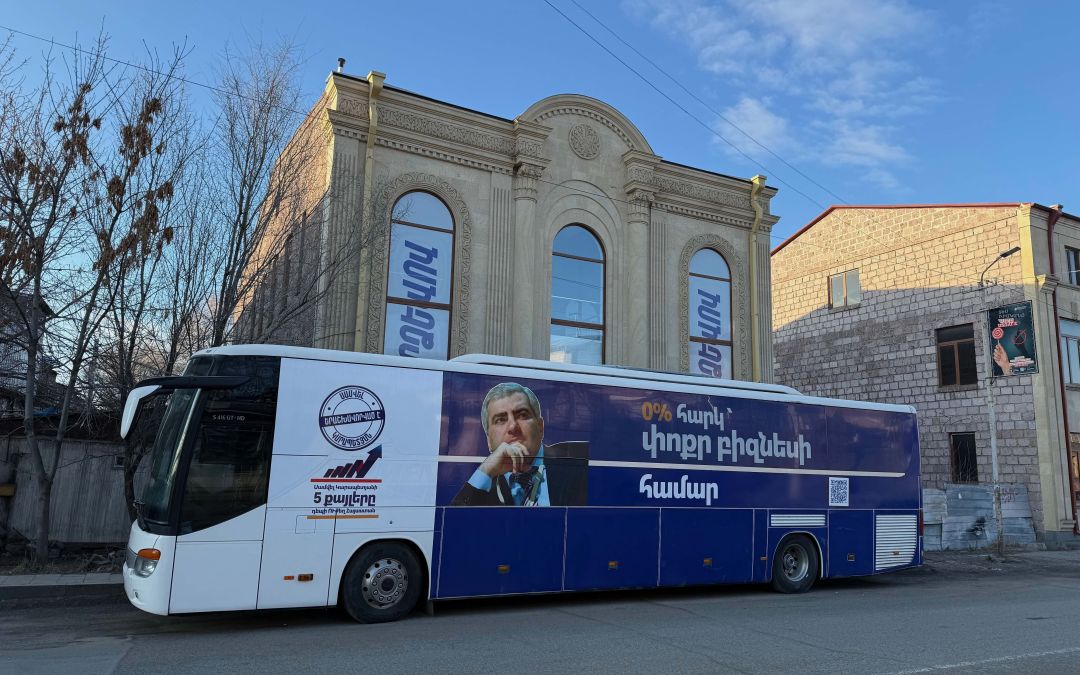
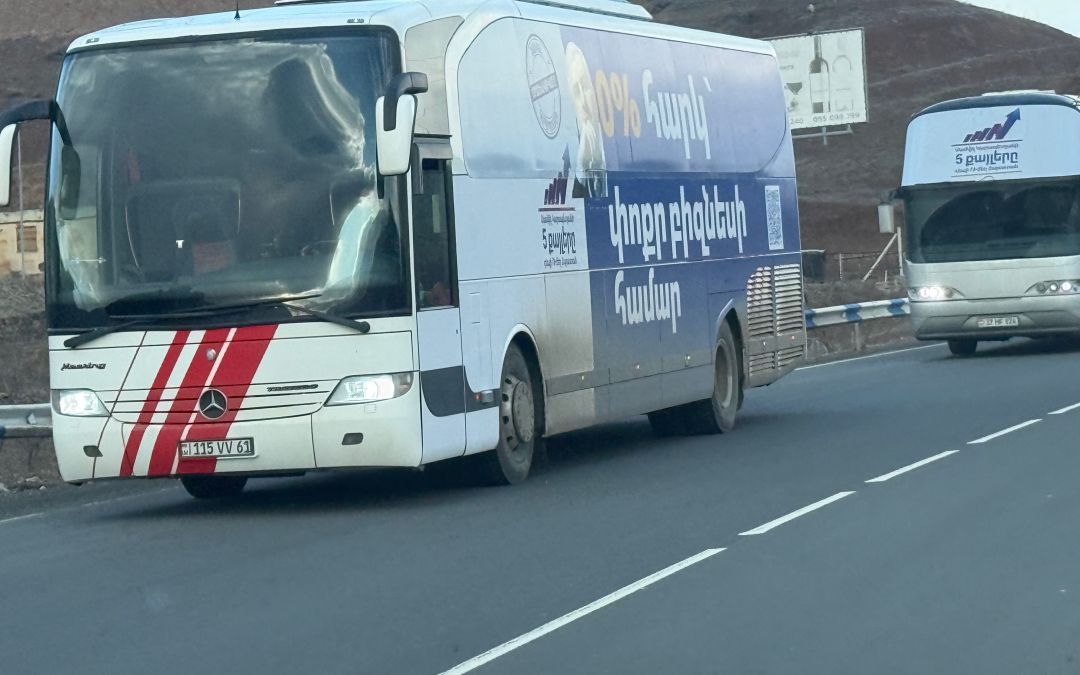
The campaign for the upcoming parliamentary elections in Armenia can already be considered launched. Prime Minister Pashinyan and his team are traveling through the cities and villages of Armenia, familiarizing themselves with the problems of ordinary people and handing out orange Armenia map-badges, which he also wears on his chest.
Meanwhile, Robert Kocharyan stated in a recent podcast that the Abkhazian railway represents a new opportunity for Armenia and is much better than TRIPP could ever be. In another turn of events, Samvel Karapetyan sent an AI-generated video message to a rally organized by his political force in Yerevan's Opera Square. “We want to make Armenia a blessed home where people can live with dignity, work with dignity, and be fairly paid — not a poor shelter that everyone wants to escape from. We will be strong in Moscow, we will be strong in Washington, and we will be strong in Beijing,” the AI-generated message declared.
No matter how much the opposing sides and political forces accuse each other of corruption, wars, and bad governance, in the end, the discourse often boils down to the binary concepts of “pro-Russian” and “pro-Western.” However, while they compete and wait for the election results, it is crucial to understand how significant the role and involvement of Karabakh Armenians are in this electoral process.
The Passport Dilemma
The Armenians of Nagorno-Karabakh hold Republic of Armenia passports, but in the past, they held their own elections in Karabakh and did not vote in Armenian national elections. Historically, the results of elections in Nagorno-Karabakh were not much different from those in authoritarian countries. For example, the former leader of Nagorno-Karabakh, Bako Sahakyan, who is currently imprisoned in Baku, reportedly collected 83 percent of the vote during his election.
Nonetheless, in September 2023, the entire population of Nagorno-Karabakh arrived in Armenia with their Armenian passports, and to this day, their status remains controversial. Are they refugees or citizens of the Republic of Armenia? Although they hold the same blue Armenian passports, the Armenian government does not consider them full citizens and suggests that they apply for a new, "regular" passport.
Curiously, without any obstacles, Karabakh Armenians can travel to all Schengen countries with their "070 code" passports. Currently, the main motivation for applying for formal Armenian citizenship is to take advantage of the government’s housing program, which offers financial assistance to buy or build a home. However, the bureaucratic process remains lengthy.
Overloaded Systems and Political Suspicions
In an interview with Sputnik Armenia, Nelly Davtyan, Director of the Migration and Citizenship Service of the Ministry of Internal Affairs of Armenia, addressed the question of whether the process of granting citizenship to Karabakh Armenians is being deliberately delayed before the elections due to their perceived opposition views.
Davtyan noted: “Yes, there is a certain delay. However, this is naturally not due to the pre-election period, but to the fact that we launched a new program on January 1. Objectively, our system is severely overloaded. In four months, we have already received as many applications as we would typically process in a year. But we are already close to returning to an accelerated process, and I do not exclude that even if a displaced person decides to become an Armenian citizen today, he or she will have time to receive a passport and participate in the elections. Now, the results of all cases under our jurisdiction will be received before the elections, and we have not registered any refusals.”
According to Davtyan, 36,000 Karabakh Armenians have received new passports, 12,000 of whom are minors, and 6,700 applications are pending. This means that only approximately 24,000 Karabakh Armenians, plus a few thousand expected to receive documents before the vote, will be able to participate. This raises a critical question: what about the remaining 70,000 or more adults who have Armenian passports but cannot vote? Earlier, it was officially announced that 11,000 Karabakh Armenians have left Armenia permanently.
A Quest for a "Pro-Armenian" Choice
To date, the "070 code" passports have not been declared invalid. However, the Armenian government issued Karabakh Armenians a temporary refugee certificate in 2023. To transition, they must fill out a form stating, “I am not a citizen of any country,” after which they receive a passport with a new code and become "real" citizens of the Republic of Armenia. Consequently, thousands will not have the right to vote in the upcoming elections because some are still waiting, while others refuse to apply at all.
“As far as I know, after obtaining Armenian citizenship, we will have the right to vote in a year,” says Narine Grigoryan, a Karabakh Armenian. “I applied for citizenship online and am still waiting. My parents will not apply because they each have 20 square meters of living space in Armenia; they consider it unnecessary to apply for a 'new' passport. However, if I had the right to vote, it would be difficult for me to make a choice. Some are pro-Russian, others are pro-Western, but I am looking for the pro-Armenian one,” Narine told Caucasus Watch.
Tatevik Khachatryan, another Karabakh Armenian, shared a different perspective: “My husband and I have already obtained Armenian citizenship, but I do not consider it ethically correct to say now which political force we will vote for. In any case, we will definitely not vote for the current authorities. In my opinion, Karabakh Armenians are involved in the electoral process, even those who do not have the formal right to vote. It is clear that many do not want to see the current authorities remain in power.”
She added: “The government of Armenia decides how much tax we should pay, what financial assistance we receive, and in which army our sons and brothers should serve. Therefore, I consider it natural that all Karabakh Armenians should have the right to vote in these elections. Personally, I should have the right to know who will make decisions for my child's future.”
The Weight of History and Future Uncertainty
The issue of Nagorno-Karabakh has always played a vital role in Armenian elections. A long-standing stereotype suggested that the President of Armenia must be of Karabakh origin to ensure the region was not "sold out." The fact that Armenia's second president, Robert Kocharyan, and third president, Serzh Sargsyan, were of Karabakh origin gave many a sense of security. Today, many Karabakh Armenians remain united around them or sympathize with Samvel Karapetyan, who promises to solve the social problems they have faced since 2023.
Deeply disappointed with both the Armenian government and their former local authorities, the people of Nagorno-Karabakh find themselves in a difficult position. When Nagorno-Karabakh authorities attempted to form a government in exile after 2023, Nikol Pashinyan declared that there is only one government in Armenia: the government of the Republic of Armenia.
“Many have joined Samvel Karapetyan's forces, although they may not see him as Prime Minister. I thought of voting for Kocharyan because he brought the country out of chaos during his presidency. However, this time, I am undecided. I just know the country needs a strong leader. The current authorities must leave,” says a Karabakh Armenian currently living in Gyumri.
Ani Balayan, a journalist from Nagorno-Karabakh, notes: “Three of our five family members have already received Armenian citizenship. My parents’ applications have been prolonged. I think 90% of those who can vote will prefer an opposition force.” Another displaced person in Masis added: “There is no clear orientation regarding the elections yet, but many around me want to see Samvel Karapetyan as Prime Minister.”
The "Unclosed Page"
Despite the bureaucratic hurdles, former Nagorno-Karabakh deputies recently elected Ashot Danielyan as the Speaker of their National Assembly. “The page of Artsakh (Nagorno-Karabakh) is not closed. This is an irreversible commitment,” Danielyan stated during the Armenian Diaspora Conference in Paris on April 11. “When state policy ignores or underestimates our national values, despair and distrust arise. This policy not only destroys national unity but also allows hostile forces to continue the humiliation and defeat of the people.”
While representatives travel to international conferences, ordinary people in Armenia continue to face pressing social and bureaucratic issues. For many, their "daily bread" is more important than domestic political maneuvers.
The situation for Karabakh Armenians remains fragmented: some consider themselves representatives of a government in exile, some are now full Armenian citizens ready to vote, and a vast majority are simply waiting for documents. In conclusion, it appears that the involvement of the majority of Nagorno-Karabakh Armenians will not play a decisive role in the elections scheduled for this summer. At best, competing parties will use their social needs as campaign promises or once again leverage the Karabakh issue for political gain.
Contributed by Marut Vanyan
Insights,
Politics,
Armenia, Nagorno-Karabakh |
Robert Kocharyan, Nikol Pashinyan, Samvel Karapetyan, Marut Vanyan