
Waiting at the Border: Uncertainty over Armenia-Türkiye Rapprochement
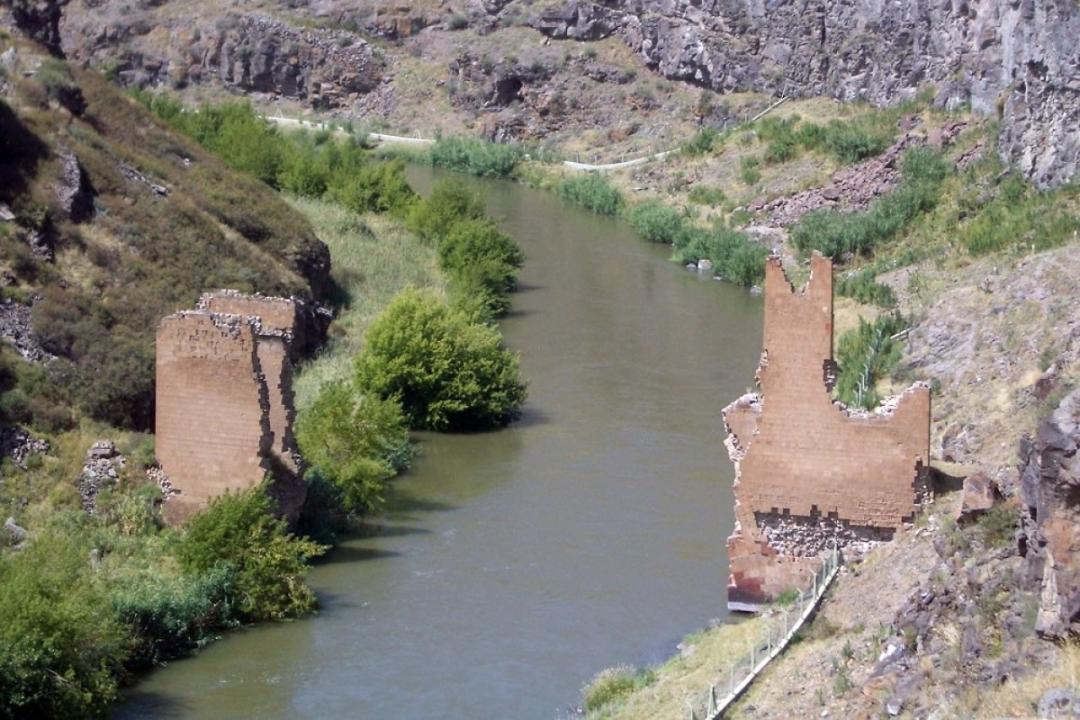
For more than three decades, the Armenia-Türkiye border has remained closed. Türkiye closed the frontier in 1993 in solidarity with Azerbaijan during the First Nagorno-Karabakh War. The closure cut off trade, travel, and normal relations between the two neighbors.
Today, that status quo is beginning to shift. Diplomats and governments are cautiously exploring the possibility of reopening one of the region’s last remaining closed borders from the post-Soviet period. Armenian Prime Minister Nikol Pashinyan has called the reopening only a matter of time, signaling that Yerevan sees deeper cooperation with Ankara as inevitable. Yet while the political gesture draws attention, the social and economic implications for people on both sides are complex and varied.
In Armenia’s Shirak region, just kilometers from the sealed frontier, the prospect of open borders carries real economic promise. Local voices talk about trade, jobs, and connection rather than diplomacy. Small business owners and farmers imagine a day when cross-border commerce could bring money into struggling communities, help local producers reach new markets, and attract visitors to towns that have seen investment dry up over decades. An expert on regional economics has said that the border reopening could lead to more cross-border trade, improved infrastructure, and increased people-to-people contact. He adds that it could bring significant social, economic, and psychological benefits, connecting Armenia with new trade routes and partners.
Some residents in Shirak recently told reporters that while they hope reopening the border will boost local markets and attract investment, they also worry about competition from larger Turkish companies. In a conversation I had with a local resident, they expressed cautious optimism, saying that economic ties and cross-border trade are welcome, but they must not come at the expense of acknowledging historical memory and past trauma—something echoed by many Armenians in the region and beyond. “Opening the border cannot mean forgetting what happened,” they said.
In Türkiye’s Kars region, sentiment is more pragmatic. Shopkeepers, taxi drivers, and ordinary residents see the border reopening as a tangible opportunity to improve livelihoods. They expect a boost in tourism, an increase in trade, and a slowdown in emigration from the region. Residents believe that opening the border could bring the economic revival they have waited years to see. The mood there seems less emotionally charged than in Armenia, where historical grievances shape public perceptions.
History understandably continues to influence attitudes in Armenia. Many people carry the weight of collective memory, including the Armenian Genocide and decades of closed borders. Some express fear that opening the frontier could make Armenia more vulnerable politically or culturally. Others worry that while the economic benefits may be real, they could be outweighed by competition from larger Turkish enterprises.
Online and in-person discussions among Armenians reflect a mixture of hope and anxiety. Some describe crossing the border to visit historic sites as a personal dream, while others are concerned it could give Türkiye political leverage without meaningful guarantees. Public opinion surveys illustrate this tension. A 2015 survey by the Caucasus Research Resource Center found roughly half (51 percent) of Armenians supported opening the border with Türkiye under certain conditions. More recent data suggests attitudes may have slightly hardened. A nationwide survey conducted in September 2024 found that 56 percent of Armenians still oppose reopening the border, citing security concerns and risks related to unrestricted entry. These numbers underline that public opinion is divided and likely influenced by current regional tensions, including ongoing challenges with Azerbaijan.
Regional security concerns are central to Armenian calculations. Many see the potential reopening of the border through the lens of Armenia’s relationship with Azerbaijan. Military posturing along the eastern frontier has heightened anxieties, making some wary of policies that could be interpreted as politically risky.
Despite cautious diplomatic engagement in recent years, the Armenia-Türkiye normalization process continues to face several structural obstacles that explain its slow and uneven progress. The most significant constraint is the persistent linkage between Armenian-Turkish normalization and Armenian-Azerbaijani relations. In practice, Ankara has aligned much of its regional posture with Baku, meaning that progress on normalization is often tied, directly or indirectly, to movement on a broader Armenia-Azerbaijan peace agreement. Issues such as transport routes, regional connectivity, and border delimitation continue to shape this dynamic.
A second major obstacle is the long-standing trust deficit between Armenia and Türkiye. Decades of closed borders and a difficult shared history continue to limit political flexibility on both sides. The legacy of the Armenian Genocide (and Türkiye’s continued denial) remains a central element of Armenian collective memory and political discourse, while in Türkiye the issue remains highly sensitive and often politically constrained. This creates a situation where even symbolic steps are difficult to sustain without domestic backlash.
Domestic political considerations also play an important role. In Armenia, any move toward normalization must be justified domestically in terms of tangible economic or security gains, especially given lingering concerns about asymmetry. In Türkiye, the relationship with Azerbaijan and the broader regional strategy often take precedence over bilateral engagement with Armenia, limiting the political space for deeper normalization.
Finally, broader geopolitical shifts have added both opportunity and uncertainty. Russia’s reduced influence in the South Caucasus, particularly following the Russian invasion of Ukraine in 2022, has altered the regional balance. While this has opened space for new diplomatic engagement, it has also removed a key external player, leaving the process more exposed to regional volatility rather than anchored progress.
At its core, normalization has stalled because it is not a purely bilateral process, but one embedded in unresolved regional conflicts, competing strategic priorities, and deeply entrenched historical narratives. Absent meaningful progress in Armenia-Azerbaijan negotiations, large-scale normalization between Armenia and Türkiye is likely to remain incremental rather than transformative.
These structural constraints are mirrored in domestic political debates in Armenia. Some political figures argue that economic openness must be paired with clear regulations to protect Armenian producers and investors. They contend that rules governing land ownership, real estate, and foreign investment should be in place before any full border opening occurs. These discussions illustrate that, for many Armenians, reopening the border is not just a question of commerce but of safeguarding economic and cultural interests.
In Türkiye, public opinion is less polarized but also far from consolidated. Surveys suggest a relatively even split between those who support and those who oppose normalization, alongside a sizable share of the population that remains indifferent or undecided. Support is generally higher among individuals who have had prior interactions with Armenians, pointing to the role of personal exposure in shaping attitudes more than abstract nationalist narratives. At the same time, views are often conditional rather than firmly held. Many Turks frame the issue through a pragmatic lens, emphasizing potential gains in trade, tourism, and regional connectivity, while remaining sensitive to geopolitical considerations, particularly Türkiye’s relationship with Azerbaijan. As a result, normalization is less a question of identity or historical reckoning in the public mind and more one of cautious, interest-driven calculation.
Despite the buzz, no official date for a full border opening has been announced. Negotiations continue, and agreements reached in 2022 envision a phased approach, starting with third-country nationals and holders of diplomatic passports. Armenia’s Margara checkpoint is reportedly ready to carry out customs procedures once an agreement is implemented. Officials on both sides have said that practical preparations are underway, including infrastructure upgrades and customs arrangements.
Armenian special envoy Ruben Rubinyan has avoided predicting a specific opening date, signaling that authorities want to avoid raising expectations prematurely. Media reports suggest the border could open within months in 2026, possibly in time for Armenia’s June parliamentary elections, but these projections remain speculative and dependent on broader regional developments, particularly peace talks involving Azerbaijan.
Small steps toward normalization have already taken place. In late 2025, Armenia and Türkiye simplified visa procedures for diplomatic and service passport holders, signaling modest progress even as full opening remains uncertain.
The economic case for reopening is clear. Armenia’s landlocked economy has faced high transportation costs and limited access to markets due to closed borders. A gateway into Türkiye could diversify trade routes, reduce supply chain costs, and attract investment. For Turkish border regions, the stakes are more immediate, with opportunities for everyday workers and entrepreneurs to benefit from increased trade and tourism. The exact scale of benefits will become clear only once agreements are finalized and the border becomes operational.
Beyond economics, the reopening carries psychological weight. For many Armenians, the border represents isolation and unresolved historical trauma. Young people who have grown up hearing about conflict rather than travel may find the idea of crossing into Türkiye both exciting and unsettling. In eastern Türkiye, the border is seen more pragmatically as a potential connection to economic life that once existed decades ago. Online discussions among young Armenians show a mix of enthusiasm and caution, reflecting both curiosity and concern about political and cultural implications.
Opening the Armenia-Türkiye border would be more than a diplomatic gesture. It would be a social, economic, and cultural turning point with implications that reach into daily life on both sides. The optimism of shopkeepers in Kars, the cautious excitement of villagers in Shirak, and debates among Armenians online underscore that the issue echoes far beyond governments and treaties. For Armenia, it is a question of opportunity and apprehension in equal measure. For Türkiye, it is largely a question of practical and geopolitical opportunity with less emotional baggage. Whether the border opens soon or not, the conversation itself has already reshaped how people imagine their future, not just in capitals and ministries, but where borders touch lives.
Contributed by Davit Gasparyan, who researches security and political dynamics in the South Caucasus and Russia's regional strategy. He conducts research with Harvard's Belfer Center for Science and International Affairs and previously served as a Russia researcher at the Institute for the Study of War. He has also worked with the Carnegie Endowment for International Peace.