
The South Caucasus Bottleneck: Georgia’s EU Freeze and Armenia’s European Path
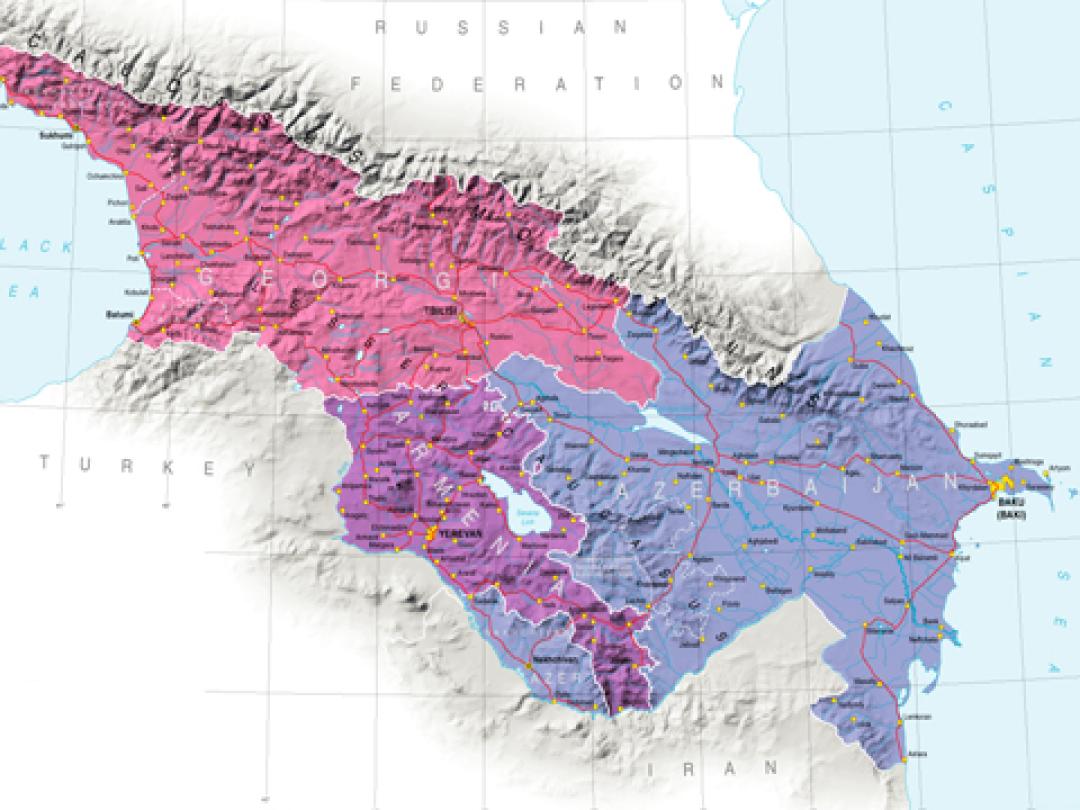
When Nikol Pashinyan stood before the European Parliament in Strasbourg on March 11, he did more than restate Armenia’s European ambitions. He exposed a regional truth that Brussels often prefers to treat as background noise. Armenia’s aspirations toward Europe now run through Georgia, and Georgia’s effectively stalled relationship with the EU has become a strategic constraint for Yerevan. Pashinyan said plainly that the “biggest problem” on Armenia’s EU path is the frozen political dialogue between the European Union and Georgia, and he described Georgia as Armenia’s gateway to the European Union.
That line matters because it was not a rhetorical improvisation. Pashinyan reminded MEPs that Armenia adopted a law in March 2025 to launch its accession track, and that this move followed Georgia’s receipt of candidate status in December 2023. In other words, Armenia’s European turn has not emerged in a vacuum. It has been shaped by the regional context around it, by the example next door, and by the very practical reality that a landlocked state cannot ignore the limitations of its position. When Georgia strategically moved toward Europe, Armenia gained westward momentum. When Georgia began to reverse course, the implications arrived at Yerevan's doorstep almost immediately.
Pashinyan's speech connected European integration to the new peace architecture taking shape in the South Caucasus. He presented the joint declaration signed in Washington on August 8, 2025, as effectively securing peace between Armenia and Azerbaijan, and he emphasized Armenia's intention to advance the TRIPP infrastructure program, a corridor project designed to ease movement between mainland Azerbaijan and Nakhchivan and to tie the region's post-conflict order to actual transit flows rather than diplomatic language. The first freight train to arrive in Armenia via Azerbaijan, transiting through Georgian territory in 2025, was the kind of event Pashinyan described as symbolic. It was also a reminder that Georgia sits at the center of every meaningful connectivity story in the region, whether the subject is Armenian-Azerbaijani normalization, east-west trade routes, or EU membership. Indeed, around 70–80 percent of Armenia’s trade with Europe moves through Georgian territory, primarily via the ports of Poti and Batumi. The main overland route runs north through Georgia’s logistic networks to the Black Sea. The above-mentioned assumption shaped regional thinking, including in Yerevan. Armenia’s own drive toward Europe was partly built on the expectation that Georgia would anchor the region’s connection to Brussels. These expectations no longer hold. The two-sided political stagnation between Georgia and the EU has turned what was once a strategic asset into a point of uncertainty.
The consequences of Georgia's drift have not stayed inside Georgian borders. From spring 2025, Armenia experienced a de facto partial disruption of its trade flows through Georgian territory. Georgian authorities initially demanded above-market transit and administrative fees for the rail freight that Armenia and Azerbaijan had worked on restoring, and the matter was only resolved after public pressure and political signals from both Baku and Yerevan. These are not isolated incidents. They form a pattern of behavior from a transit state becoming politically unreliable at exactly the moment its reliability matters most.
That centrality is precisely why Pashinyan’s complaint about the EU-Georgia freeze should be read as a structural warning, not a courtesy remark. Georgia applied for EU membership in March 2022 and gained candidate status in December 2023, but the Council says the accession process came to a de facto halt in 2024, and the Commission says the Georgian government’s series of domestic actions and democratic backsliding has jeopardized the country’s European path. The Council also regretted Tbilisi’s decision to suspend accession efforts until 2028 (the pause announced in November 2024). The contrast with where Georgia stood just a year earlier, freshly granted candidate status and positioned as the region's most advanced state in that regard, could hardly be more striking. The exact institutional phrasing differs, but the message from Brussels is the same. Georgia’s European track is frozen, and that freeze now spills directly into Armenia’s strategic environment.
For Armenia, that creates a bottleneck effect with a very particular kind of vulnerability. Yerevan can pass laws, adopt reforms, invite European monitoring missions, and speak the language of integration. Pashinyan did all of that in Strasbourg. He argued that Armenia should meet EU standards, whether or not full membership follows. Yet none of that removes the fact that Armenia’s access to Europe is still filtered through a transit state whose own relationship with Brussels is deteriorating. That is why the prime minister’s statement was more than diplomatic realism. It was a reminder that Armenia’s reform agenda is no longer separable from the political status quo in Tbilisi.
Pashinyan has been careful not to frame this as a problem of Georgia or Georgian society. During a visit to Tbilisi shortly before his Strasbourg address, he stated for the first time in bilateral diplomatic language that Armenia prioritizes Georgia's sovereignty, territorial integrity, and political independence. The deliberate inclusion of that last phrase was not accidental. It was a calibrated acknowledgment that the problem does not originate in Georgia's strategic interest but in external pressures channeled through political and economic networks that operate well outside the democratic process.
On balance, Pashinyan’s address served as a timely reminder that the South Caucasus is entering a phase in which the fortunes of Armenia, Georgia, and Azerbaijan cannot be separated cleanly into national files. The Washington Declaration, the TRIPP plan, and the reopening of transit all point to a regional order that depends on connectivity and a coherent integration strategy rather than isolation. This works only when the corridor state is stable, the peace process is credible, and the Western actors are engaged enough to shape incentives rather than merely issue empty promises or reassurances. If Georgia drifts further from Europe, Armenia’s own European narrative becomes conceptually harder to sustain, not easier.
There are hedging alternatives in theory, but they are not immediately viable. The Turkish route could provide an additional corridor, but political normalization between Armenia and Turkey remains incomplete. Even if borders open more fully, this route would serve primarily economic purposes rather than the broader political diversification and institutional integration Armenia is pursuing with the EU. Southern routes through Iran are even less compatible with Armenia’s European trajectory. They might offer less secure and stable connectivity options, but not a favorable and vitally strategic alignment with European markets and standards. This leaves Georgia as the only realistic gatekeeper in the medium term.
Georgia, meanwhile, is paying a price that is larger than a stalled negotiation chapter. That matters because Georgia’s greatest foreign policy asset has long been its value as the South Caucasus bridge to Europe. When that bridge becomes politically unreliable, Georgia loses more than symbolic prestige. It risks both limiting and weakening its leverage over the entire regional economic and connectivity architecture. While Georgia's relationship with Brussels deteriorated, Armenia was signing a strategic partnership agreement in Brussels, inviting EU border monitoring missions, and mapping out a roadmap for gradually reducing economic dependence on the Russian-led Eurasian Economic Union. Armenia has done what Georgia had longer and better conditions to do first.
For Georgia, the regression of current events is the loss of the role it spent two decades building. Georgia was once a reform leader, the corridor state, the anchor of the South Caucasus's western orientation. That role is being claimed, by necessity, by Yerevan. The European Political Community summit scheduled for May 4, 2026, in Yerevan will be the first time this pan-European forum has gathered in the South Caucasus. The venue choice reflects a region in transition and a Europe increasingly willing to engage where it once kept its distance. Georgia, where the summit could reasonably have been expected to take place, has been replaced by its neighbor.
For the European Union, the situation demands a harder look at the logic of regional interdependence. The EU cannot meaningfully support Armenia's European integration while treating Georgia's political course as a bilateral matter to be managed through patience and formal channels. The frozen EU-Georgia dialogue not only harms Georgia. As Pashinyan made clear before the European Parliament, it creates cascading uncertainty for states that have oriented their futures around a European-anchored South Caucasus.
In addition, the August 2025 peace accord left Russia outside the room, and the TRIPP deal was explicitly structured to reduce dependence on routes and intermediaries that Moscow has historically controlled. The restoration of rail traffic between Armenia and Azerbaijan, and Russia's continued obstruction of direct rail links through its control of the Armenian railway, make clear that the battle over the South Caucasus's connectivity architecture is ongoing and contested. A weakened EU-Georgia relationship does not simply slow a diplomatic process. It creates a significant opening that outside actors will move to fill.
Looking ahead, the situation is not irreversible, but it requires a realistic assessment. If Georgia manages to restore a functional and predictable relationship with the EU—however unlikely that may currently be—the reciprocal benefits will be immediate and measurable. This would also directly incentivize Armenia’s integration efforts.
If current tendencies continue, which is a more likely scenario, Armenia will need to adapt. In this context, this could mean investing more in alternative routes, diversifying trade partners, or accepting higher costs for accessing European markets. None of these options is ideal, and all of them slow down and limit the integration process.
Pashinyan's observation in Strasbourg was, at its core, a simple one. Armenia can orient itself toward Europe, but it cannot reach Europe alone. Without a democratic, European-oriented Georgia, Armenia cannot remain a westward outlier in the region indefinitely. It is the central strategic reality of the South Caucasus right now, and Brussels cannot afford to treat it as anything less.
Contributed by Luka Okropirashvili for Caucasus Watch
Insights,
Politics,
Armenia, Azerbaijan, Georgia |
EU, South Caucasus, Nikol Pashinyan, TRIPP, Luka Okropirashvili