
Georgia Intensifies Criticism of EU and Ambassador Herczynski Over Domestic Political Tensions
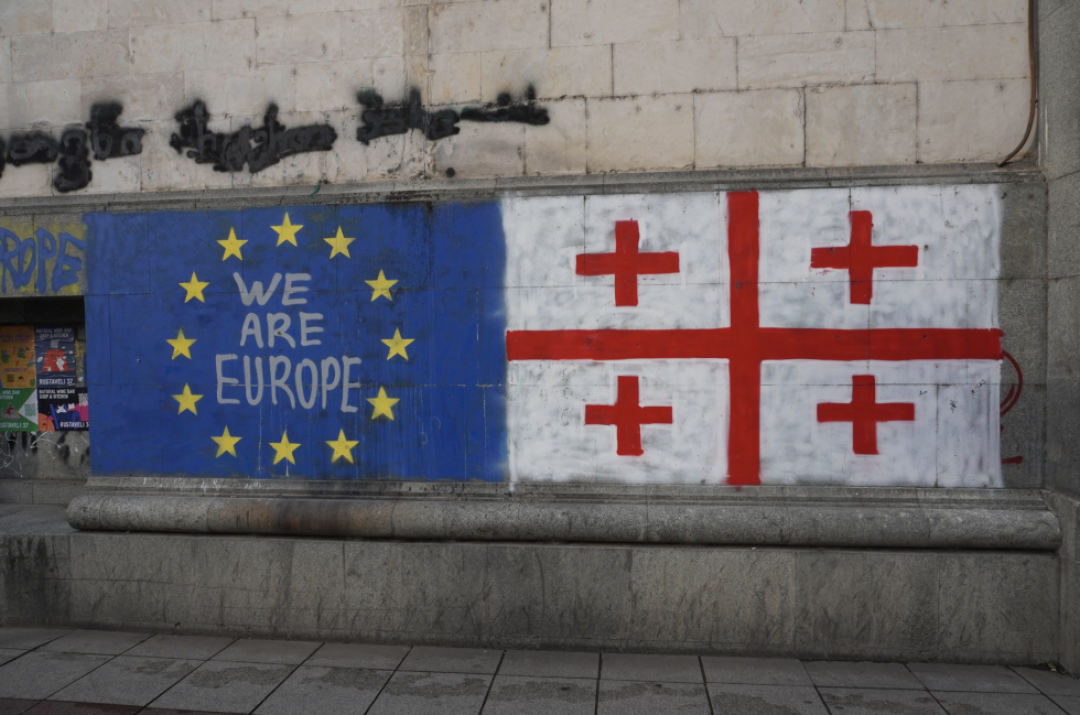
Georgian leaders Shalva Papuashvili and Prime Minister Irakli Kobakhidze sharply criticized EU policies and Ambassador Pawel Herczynski, accusing the EU of interfering in Georgia’s internal affairs, supporting unrest and opposition forces, misrepresenting Europe Day principles, and damaging relations with Georgia through politically motivated actions.
Papuashvili's Letter to Herczynski
On May 8, Shalva Papuashvili, the Speaker of the Parliament of Georgia, published an open letter addressed to Pawel Herczynski, the European Union Ambassador to Georgia, on the occasion of Europe Day. In the letter shared on social media, Papuashvili congratulated Herczynski on the occasion, while criticizing the current policies of the European Union toward Georgia and arguing that they contradict the original principles behind European integration.
Referring to the legacy of Robert Schuman and the founding vision of the European Union, Papuashvili emphasized that the Schuman Declaration was built on the idea of preventing another devastating war in Europe through unity, mutual respect, and shared responsibility. He stated that contemporary EU policies should be assessed against those principles. According to Papuashvili, Herczynski’s Europe Day address from the previous year ignored the anniversary of the end of World War II and instead focused on political disagreements with Georgia. He stressed that Georgian families had made enormous sacrifices during the war and argued that separating Europe Day from Victory Day was unacceptable for Georgian society.
Papuashvili expressed hope that the EU’s May 9 gathering would honor the approximately 300,000 Georgians who died fighting Fascism. Quoting Schuman’s statement that "A united Europe was not achieved and we had war," he argued that the current EU leadership had abandoned the founding spirit of European unity. According to him, politically motivated European Parliament resolutions, economic pressure, and what he described as continuous interference in Georgia’s domestic affairs had deepened divisions between Georgia and the EU instead of strengthening cooperation. He further stated that the European integration process should not involve "Brussels’ unilateral assumption of suzerainty over Georgia," but rather a restoration of historical ties among equal European nations. Papuashvili emphasized that Georgia considered itself part of European civilization regardless of political disputes and criticized what he described as attempts to impose ideological uniformity on the country. According to him, "national independence, Christian values, and traditional ways of life" should remain part of the European identity.
Papuashvili also accused European actors of encouraging "regime change" narratives against Georgia’s democratically elected government and claimed such approaches contradicted the EU’s founding values. Referring to economic relations with Russia, he argued that some European officials had pressured Georgia to engage in "economic warfare" against Moscow without offering security guarantees or economic support. According to him, such a policy would have caused severe economic consequences for Georgia and destabilized regional transport and energy corridors.
The Speaker additionally accused Brussels of supporting "violence, hate speech, and radicalism" in Georgia. He stated that he had previously appealed to European officials to condemn radical rhetoric but had received no response. Papuashvili linked this alleged inaction to the October 4 events, during which protesters attacked the Presidential Palace. He claimed that no European official had publicly condemned what he described as an attempted coup and criticized recent European remarks suggesting Georgia was moving toward a "dark past." According to Papuashvili, the EU should abandon "offensive rhetoric," reconsider what he described as harmful policies, and restore dialogue based on mutual respect and unity. He concluded that Europe Day should once again symbolize "peace, cooperation, and unity grounded in respect for nations and their identities."
Papuashvili's Remarks
During comments to journalists later on May 8, Papuashvili stated that the October 4 violence, the injury of 25 police officers, and the alleged attempted coup were "entirely the political responsibility of Brussels." He argued that foreign politicians and ambassadors had encouraged Salome Zourabichvili and opposition groups by supporting what he called the "false presidency." According to him, statements from European officials before the events amounted to support for a "Nepal scenario," which Georgian authorities associate with violent unrest. "In reality, this is an attempt to cover up the political crime that Brussels committed against Georgia," Papuashvili stated. He further claimed that supportive reactions from Brussels during the unrest encouraged violence against state institutions. According to him, foreign-backed organizations and opposition groups were attempting to justify attacks against the state and portray those involved as heroes.
Papuashvili also criticized the Estonian branch of Transparency International after it referred to detained individuals as political prisoners. He stated that "everyone who finances this organization is an enemy of Georgia" and called for an investigation into the financing of Transparency International Georgia. According to him, anyone attempting to justify a return to the violence of the 1990s was acting against Georgian national interests.
Speaking further about possible protests planned for May 26, Papuashvili stated that the presence of opposition figures at Europe Day events organized by the EU would reveal "who is behind the next attempt at unrest." He accused opposition groups of seeking foreign support in European capitals to overthrow the Georgian government, comparing their actions to historical examples of political betrayal. According to Papuashvili, radical opposition forces had repeatedly failed to destabilize the country despite external backing. He claimed the Georgian public had rejected attempts to provoke violence and bloodshed, including during the October 4 events. "They also failed on October 4, when they wanted to organize a ‘Nepal’ and shed blood in Georgia," Papuashvili stated.
Commenting on the legal proceedings related to the October 4 case, Papuashvili argued that the term "unity" should no longer be used in relation to the opposition. He described opposition groups as a "criminal association" acting against the Georgian state and claimed their activities amounted to organized political crime.
Kobakhidze's Remarks
On May 9, Irakli Kobakhidze, the Prime Minister of Georgia, sharply criticized Pawel Herczynski and the Europe Day events organized under his leadership. Responding to journalists, Kobakhidze described the ambassador as "a tragic person" and accused him of deliberately damaging relations between Georgia and the European Union.
"Mr. Herczynski has been doing everything he can to spoil relations between Georgia and the European Union for years," Kobakhidze stated. According to the Prime Minister, Herczynski had formally been tasked with deepening EU-Georgia ties but instead acted in the opposite direction. Kobakhidze added that, because of this, the Europe Day event organized under the ambassador’s leadership "does not have much value."