
Kocharyan Addresses Global Geopolitics, TRIPP Project, Karabakh, Military Procurement, Domestic Politics, and Economic Challenges
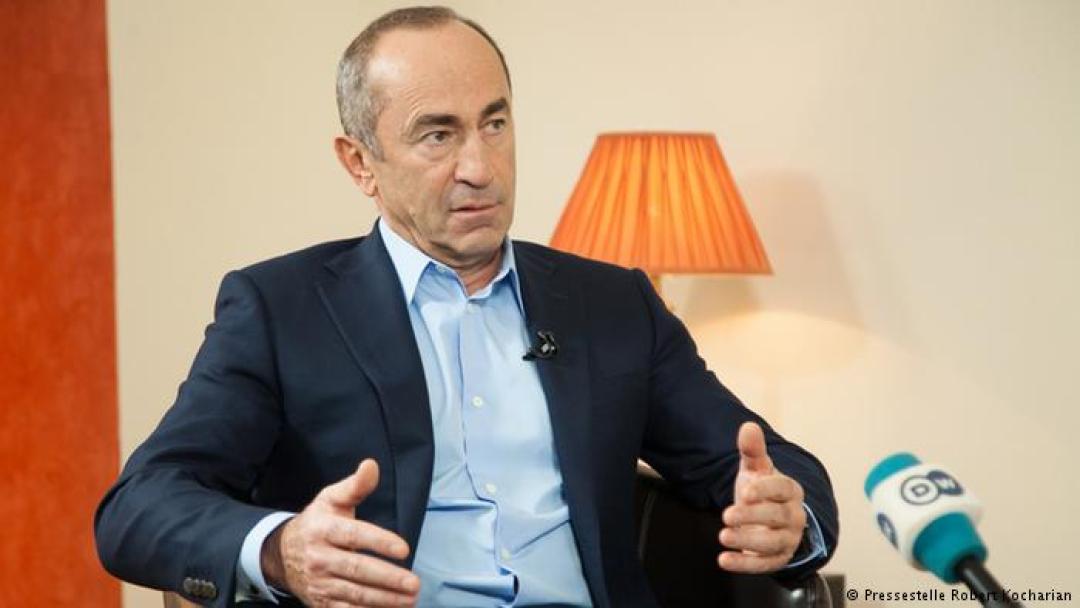
On January 29, Robert Kocharyan, the Second President of the Republic of Armenia, made a series of statements during meetings with journalists and a press conference, addressing global geopolitical shifts, Armenia’s security, domestic politics, and regional projects. Kocharyan stated that the old world order had collapsed and a new one was emerging, emphasizing that the US was dismantling the international system it had created.
He noted that the new US security concept acknowledged a multipolar world and the abandonment of ideological hegemony, identifying China as the main adversary while leaving room for pragmatic relations with Russia. He emphasized that Europe was implicitly portrayed as weakening and that the South Caucasus was not mentioned, which, in his view, indicated an absence of fundamental US interests in the region. He stressed that international relations had entered an era where "politeness is a thing of the past" and force increasingly replaced law, warning that Armenia must avoid becoming an arena for clashes between major powers.
Referring to past examples, Kocharyan stated that Georgia under Mikheil Saakashvili, Ukraine under Volodymyr Zelenskyy, and Armenia under Nikol Pashinyan had all attempted to maneuver between major powers and suffered wars and territorial losses as a result. He emphasized that Armenia must learn from these cases and act with greater caution and diplomatic skill.
Turning to the TRIPP project, Kocharyan stated that it was an Armenian-American initiative that primarily benefited Azerbaijan and Turkey and did not reflect Armenian interests. He emphasized that Armenia was not a full participant in the project and argued that its expansion, potentially with the involvement of Russia or China, could have mitigated conflicting interests. He stressed that the US had no economic interest in the South Caucasus, noting that bilateral trade volumes were negligible, and argued that Washington’s primary motivation was Iran and control over the Iranian border. "With this project, Armenia is placing itself at the point of collision of major geopolitical interests," he stated, adding that TRIPP could become Armenia’s "greatest security threat".
Kocharyan expressed confidence that Russia would not participate in the TRIPP project, emphasizing that the US would seek to exclude countries with close relations with Iran. He stated that he would welcome the project only if Russia or China joined, which could alleviate Iran’s concerns.
Addressing the issue of the right of return for the Karabakh population, Kocharyan emphasized that the focus should be on enshrining the right itself rather than immediate physical return. He stated that active diplomacy was the only realistic path forward and argued that the international community would find it difficult to reject such a claim. He also criticized the current peace treaty framework, stating that peace could not depend on "the mood of one person—Ilham Aliyev," and emphasized the need for a comprehensive system of guarantees.
Commenting on Armenia’s military procurement policy, Kocharyan rejected claims that CSTO membership had hindered arms purchases, stating that Armenia had acquired weapons from multiple sources but benefited from favorable pricing and logistics with Russia. He criticized what he called a "weapons zoo," warning that fragmented procurement created logistical, financial, and maintenance problems.
In domestic politics, Kocharyan stated that Armenia faced a unique situation in which fundamental questions of identity had entered the political agenda. He emphasized that debates over national identity, the Church, and historical continuity had created conditions for broad opposition cooperation and the formation of large electoral blocs. He stated that the opposition could realistically enter elections with three or four major alliances instead of dozens of fragmented parties.
Kocharyan stated that opinion polls indicated he was currently the strongest potential leader of an opposition bloc, but emphasized that a final decision would depend on professional sociological surveys and the overall effectiveness for the team. He added that electoral lists would be updated with new figures while maintaining an experienced core. He also addressed his business background, stating that he had resigned from the board of AFK Sistema before the 2021 elections and held only a 0.03% shareholding, acquired during his tenure as an independent director. He emphasized that his corporate management experience complemented his background as [de-facto] President of Karabakh, Prime Minister, and President of Armenia.
Discussing economic issues, Kocharyan dismissed claims that Azerbaijani gasoline imports had influenced domestic fuel prices, calling them "propaganda gasoline". He attributed price declines to global oil market trends and emphasized that Azerbaijan lacked sufficient refining capacity to supply Armenia meaningfully. On foreign policy pressures, Kocharyan warned that Armenia was vulnerable to economic leverage from major powers, citing Russia’s ability to impose trade restrictions and recalling similar measures taken against Georgia. He stated that Armenian authorities were fostering anti-Russian sentiment ahead of elections in hopes of Western support, which he described as a risky and shortsighted strategy.
Addressing governance and institutions, Kocharyan emphasized that Armenia faced a crisis of monarchy-like power, with excessive concentration of authority in the hands of the prime minister. He stated that judicial independence had been undermined and proposed constitutional changes, including a popularly elected president or stricter parliamentary voting thresholds for judicial appointments. He criticized statements by Ararat Mirzoyan, the Foreign Minister of Armenia, regarding the Armenian Apostolic Church, calling accusations against the Church "absurd" and "immoral," and warned that undermining national identity weakened statehood itself.
Kocharyan stated that he had never met or communicated with Deputy Prime Minister Mher Grigoryan and rejected claims of political interference. He also emphasized that he did not seek ministerial or parliamentary roles and would remain an ordinary opposition member unless his political force won elections. Concluding his remarks, Kocharyan emphasized that Armenia must stop perceiving itself as limited by geography and population alone, citing examples such as Singapore, Qatar, and the United Arab Emirates. He stressed that Armenia’s true resources included its diaspora, Church, and cultural heritage, and warned that the global environment was becoming increasingly hostile for small states. He emphasized that only a pragmatic, confident, and sovereign policy could ensure Armenia’s survival and development in an increasingly dangerous world.
News,
Politics,
Georgia |
Robert Kocharyan, Nikol Pashinyan, Mikheil Saakashvili, Volodymyr Zelenskyy, TRIPP