
Robert Kocharyan Calls for Legally Enforceable Peace Guarantees, Criticizes Reliance on Leaders, And Highlights Armenia’s Economic Vulnerabilities
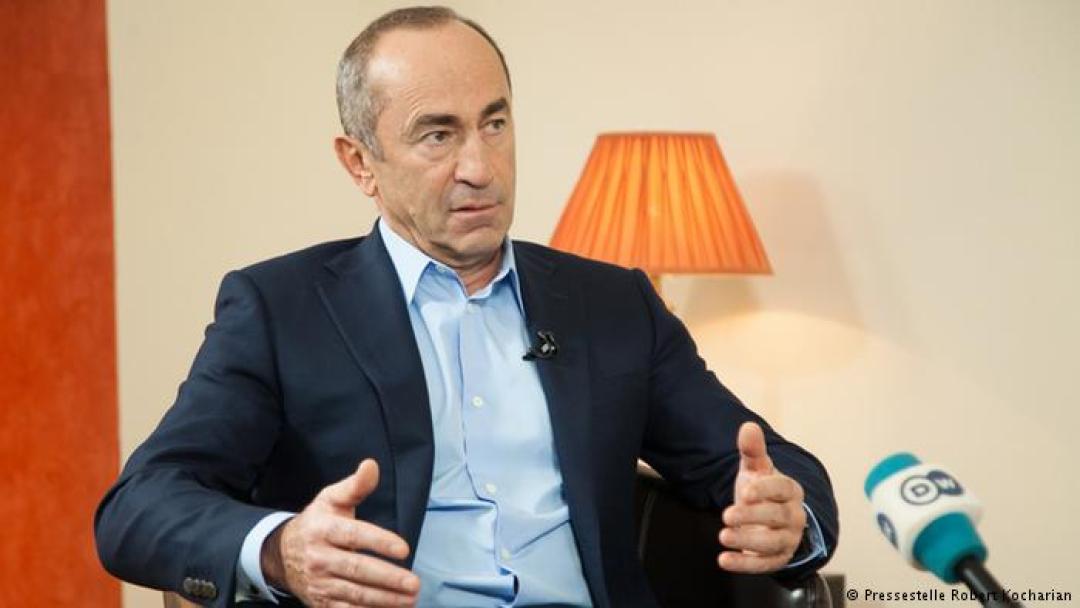
On March 14, Robert Kocharyan, the second President of Armenia, stated in a podcast that a peace agreement without guarantees cannot ensure lasting stability, emphasizing that "peace cannot depend on the goodwill of one person." He noted that earlier discussions on a peace declaration lacked legal grounding and failed to include mechanisms such as international guarantees or guarantor states.
Kocharyan stressed that durable peace requires enforceable guarantees, pointing to international examples. Referring to the Israeli-Palestinian process, he stated that despite initial optimism following the Oslo Accords, the absence of concrete guarantees led to renewed violence. He also cited Cyprus, where despite the absence of a formal peace treaty since 1974, a system of guarantees has helped maintain stability. "We want both a peace treaty and guarantees," he emphasized.
He argued that Armenia previously acted as a guarantor alongside Russia but later abandoned this role, which, in his view, contributed to the collapse of the existing security framework. He stated that Russia had served both as a mediator and a guarantor after the war, but the structure weakened when Armenia withdrew from that format. According to Kocharyan, the absence of binding guarantees leaves future developments dependent on changing political circumstances and individual decisions.
Kocharyan rejected accusations that he opposes peace, stating that guarantees would constrain both Armenia and Azerbaijan and contribute to long-term stability. He questioned why such guarantees are not being actively pursued, noting that no concrete steps have been taken to involve international actors. He expressed the view that sustainable peace should not be tied to any individual leader, including Nikol Pashinyan or Ilham Aliyev.
He stated that if a comprehensive peace agreement with guarantees were achieved, it would reduce the political significance of individual leaders in maintaining stability. According to Kocharyan, "we need a lasting peace that doesn't depend on political calculations," emphasizing that both sides would benefit from a system capable of preventing renewed conflict and limiting potential revanchist tendencies.
Kocharyan also referred to past negotiations, including discussions in Key West, where a bilateral agreement was expected to be supported by international guarantees from the OSCE Minsk Group co-chairs—the United States, France, and Russia. He emphasized that most conflicts occur between neighboring states, making external guarantees essential for ensuring long-term reliability.
He stated that both the US and Russia could potentially act as guarantors, noting that the conflict is not existential for either power and could allow for cooperation. However, he argued that the current Armenian leadership has not made efforts to engage such mechanisms, describing the existing approach as focused on short-term political objectives rather than long-term stability.
Kocharyan further stated that the absence of guaranteed peace creates ongoing risks, emphasizing that a "dignified peace" should eliminate the need for continuous concessions and uncertainty. He warned that without firm guarantees, peace would remain fragile and dependent on shifting political dynamics.
He also addressed Armenia’s economic situation, stating that recent improvements are linked to external factors following the Russia-Ukraine war rather than structural strength. He emphasized that the current economic model remains vulnerable and warned of potential challenges if geopolitical conditions change. According to Kocharyan, Armenia’s economy requires stronger industrial development and a clearer alignment between foreign policy and economic priorities.
Kocharyan noted that Armenia’s economic ties are heavily connected to Russia and the Eurasian Economic Union, arguing that a shift toward the European Union without corresponding economic integration could create risks. He emphasized that foreign policy decisions should reflect economic realities, adding that Russia’s contribution to Armenia’s economy is often underestimated.