
Leyla Keser Berber: The Caucasus Is the Heart of a Mining Super-Region
The future significance of the Caucasus for the West is far greater than its present one. The Caucasus could be key to Europe’s decarbonisation, electrification, defence and space self-reliance, aviation, and digitalisation. None of these objectives are achievable without a steady supply of rare earth minerals. The challenge is hard to overstate.
European and American industries rely on China for critical minerals, such as lithium, cobalt, and graphite, posing a significant geopolitical challenge. Such minerals are significant for clean energy technologies (batteries, solar panels, wind turbines), defence (fighter jets, missile guidance), and digital infrastructure (smartphones, semiconductors, fibre optics). Europe is 100% reliant on China for heavy rare earths and 97% for magnesium; the United States is 100% reliant on 15 critical minerals, including gallium, germanium, and antimony. China’s 2024 graphite export ban revealed the degree of Washington’s trade vulnerability. Given increasing geopolitical tensions, this challenge needs to be addressed immediately.
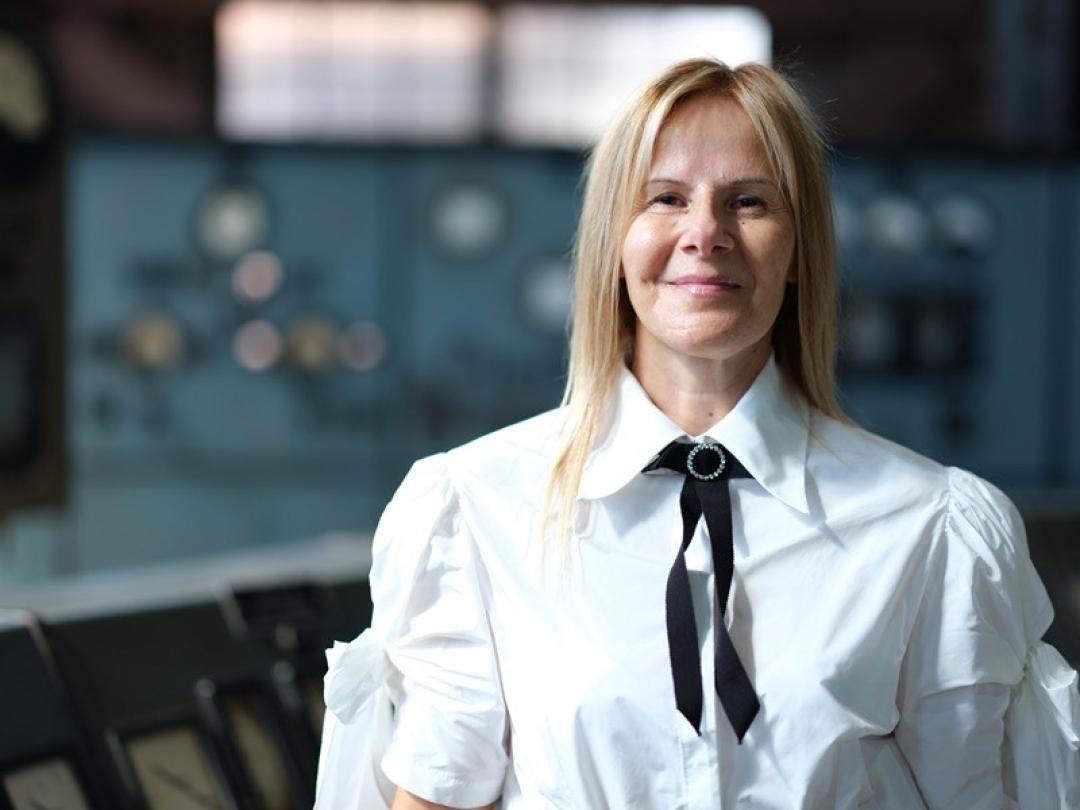
Leyla Keser Berber is the founder and Chair of the Tethys Trans-Eurasian Gateway Platform, the largest investment fund of its kind in Eurasia, focusing on sustainable mining, critical raw materials, and green energy sectors. Caucasus Watch met Dr. Keser Berber at the Third Trans-Caspian Connectivity Conference in London (02/07). She articulates the vision of the Caucasus as the epicentre of a mining super-region. In this scheme, the Middle Corridor is more about regionalising the Caucasus and Central Asia than about connectivity with China.
Türkiye is articulating an ambition to emerge as a Rare Earths Hub. Where does the Caucasus feature in this ambition?
The Caucasus stands at the heart of a mining “super-region,” a concept introduced by the Kingdom of Saudi Arabia to denote the pooling of industrial and natural resources required to extract minerals at scale. Saudi Arabia sees itself as part of a region spanning Central Asia, the Middle East, and Africa. The Caucasus spans from Türkiye, and therefore Europe, to Central Asia. The Saudi vision articulates the aspiration to develop an extraction value chain by 2030.
Türkiye sees itself as a leading power in a community of nations that share values and culture, spanning across the Caucasus and Central Asia. These come together in the Organisation of Turkic States, whose membership includes Türkiye, Azerbaijan, Kazakhstan, Kyrgyzstan, and Uzbekistan. Turkmenistan, Hungary, and Northern Cyprus are observer states. The collective vision—articulated by a Working Group on critical minerals—is to consolidate a comparable value chain by 2040. This resonates with the role of Türkiye as a buffer state that mitigates the overwhelming influence of China and Russia in the region.
This ambition resonates with the Global Gateway Strategy of the European Union and Washington’s stated objective to hedge against its singular dependence on China for critical minerals. Therefore, the significance of this super-region would be the creation of a single hub where Türkiye, like Saudi Arabia, would be at the epicentre of a new Rare Earth hub spanning across the Caucasus and Central Asia. This vision involves not only Türkiye but the entire Organisation of Turkic States. Various elements of this value chain would be distributed based on competitive advantage.
In this vision, it is not about Türkiye taking over all high-value activity to create a dependent hinterland. For instance, Türkiye would not be the ideal location for a refinery. Such an industrial venture would require competitive energy costs, low inflation, and other economic fundamentals. Azerbaijan and Kazakhstan may be far more competitive in that respect. There is, however, a recognition of strategic leadership in Türkiye. Ankara plays an overall “de-risking” role as a broader security provider between major powers such as Russia and China.
If we are talking about a landlocked “super-region” spanning tremendous distances, what is the level of investment required in logistics to facilitate access to these regional resources? Given the level of investment required, can the region be considered "completive"?
Investment in infrastructure is crucial for Central Asia, where overland distances and access cannot be taken for granted. In that respect, the development of a mineral resource value chain and the development of the Middle Corridor go hand-in-hand. For us, the strategy of pairing extraction and infrastructure development is a competitive advantage.
Generally, in Central Asia, state-owned companies prevail in sectors considered strategic. With the exception of Kazakhstan, ministries of mining tend to create state-owned companies. There are some privatised companies, but the model is usually state-driven. Governments believe that infrastructure investment, such as in roads and ports, is long-lasting and has broader multiplier effects for the economy. So, they see a significance that goes beyond mining projects.
We created a map to pinpoint mining areas along the Middle Corridor. We calculated the CapEx (funds used by companies to acquire, upgrade, or maintain physical assets) and OpEx (funds required for ongoing day-to-day costs). So, to operate these mining areas, we have to invest in the construction of infrastructure: railways and roads. Similarly, we need to invest in energy production and delivery.
We are accommodating. Our investment approach blends with national priorities. Where we are more stringent is on our standards. The World Bank and the European Bank for Reconstruction and Development (EBRD) invest substantial capital along the Middle Corridor, focusing on specific sectors, particularly infrastructure. As their partners, we work with our multilateral partners to instill a blended investment approach that mainstreams 'golden' environmental and social responsibility standards. We ensure there is complementarity between initiatives.
The goal is clear and is dictated by a geographical reality where connectivity across vast land routes is a constant challenge for every sector, including mining. Blending investment strategies requires blending finance strategies. Unless there is coordination and complementarity in finance and investment, there will be no Middle Corridor and no mining industry. To work, they need to work together. That is why we have signed an MoU with the EBRD, and we work together in the region to ensure complementarity between transport and mining infrastructure that improves the resilience of both sectors.
Mining and logistics are capital-intensive sectors. You have articulated an ambition that amounts to billions in up-front investment in long-term projects. Where will the capital come from? Venture capital, soft loans, equity, public investment?
You need to look at the region to understand its needs. With the exception of Kazakhstan, most states in the region prefer investments where the state holds a majority stake in each venture. Across the region defined by the Organisation of Turkic States, governments are the main investors. We tend to invest in logistics, soft and hard infrastructure, and energy simultaneously. When it comes to transport and logistics, investment is state-led. We develop rail and roads to access mining areas. Then private capital takes the lead. Private capital cannot go it alone in this region.
There is a lot of talk about hedging against a singular dependence on China when it comes to critical minerals, a concern raised both in Europe and the United States. If I am not mistaken, critical minerals mined in California are still being shipped to China as the West does not have the industrial capacity to turn rock into rare metal alloys. How far are we from having any real alternative to China?
The United States has a clear vision, particularly under the Trump Administration. Investment in Saudi Arabia is likely to result in substantive refining capacity and other mining activity, servicing resource regions such as the Democratic Republic of Congo (DRC), the deposits in the Gulf region, and Central Asia. Regionalising this capacity in the Kingdom makes sense, as both energy costs and the business environment are conducive. Other regional hubs will emerge to service Ukraine and Central Asia, not least Türkiye.
There is positive movement from both the United States and the European Union. The EU has signed a series of agreements with African states and with Central Asia. The United States is moving in the same direction. In April, the President of the European Commission, Ursula von der Leyen, visited Uzbekistan for a meeting with Central Asian states. Brussels pledged a €12bn investment in transport, critical minerals, and digitalisation. The United States has pledged $11bn, although this commitment lacks significant detail. China is pledging $20bn. So, there is serious interest from all major stakeholders in the region.
There is really a scramble for Central Asia. But with this multipolarity, who has the better offer? It is true that China is faster at deploying capital. For Central Asia, local stakeholders will have a range of additional considerations. The main issue is what investors bring other than money. What is the added value to the economy, what is the level of technology transfer, and how much does this investment contribute to development? China will not invest in local capacity; they bring their own people, their own technological capacity, and at times, their own workers. Their environmental track record is not superb either, for flora or fauna. Türkiye has experience and can point to success stories, particularly in building local human capacity. Harder processes come with better standards.
Since you opened the subject of environmental sustainability, Türkiye has the industrial base to harbour ambitions of becoming a Rare Earths hub. However, mining is water- and energy-intensive. We are talking 40 to 50% more water-intensive. The Caucasus and Central Asia are landlocked. There is no desalination option. Where are you going to get the water for all these projects, particularly as environmental conditions and droughts will not get better anytime soon? Surely, that is also the case for Saudi Arabia. And, since you referenced Türkiye's good track record, is it not also the case that gold mining in Türkiye is filled with very bad examples in that respect? Is it not?
As we speak, Türkiye has published the new climate law in its Official Gazette, setting a clear regulatory framework. This is no longer a theoretical discussion. Furthermore, we are accommodating European Union standards framed by the Green Deal. Besides the Green Deal, we now have a sound Blue Deal setting a clear water-resource normative framework. Türkiye is bound by these standards.
Yes, and in this context, is it not the case that certain resources cannot be extracted from certain parts of the world? No water, no mining?
True, sometimes extraction is not possible. Our private equity fund is based in Luxembourg, and we have a portfolio of ten projects in Türkiye alone, not to mention our portfolio in the wider region. Before investing in these projects, we require companies to declare their commitment to the Initiative for Responsible Mining Assurance (IRMA) standards. If they don't accept, we don't invest. We also invest in and offer the know-how for permanent carbon capture solutions via a subsidiary.
We boast top-of-the-range technological solutions in that respect. We make sustainable use of both water and soil. Using activated carbon, or biochar, we use water only once. We take the water, purify it, rehabilitate the water cycle, and eliminate heavy metals from the water and soil. We have a track record and stand by it. That is why we do not invest if stakeholders do not surrender management of standards, irrespective of whether we have a controlling stake in the venture or not. Working in partnership with the EBRD, we enforce the standards adopted by the EBRD. In Uzbekistan, for example, we work with state-owned companies and ensure adherence to IRMA standards.
You talked about Türkiye creating a geopolitical buffer between China and Russia, “de-risking” the geopolitical threat to investment in that respect. How much is this rare minerals vision about Türkiye's or the European defence industry?
Defence is crucial for Türkiye, and our geopolitical challenges are no secret. There is a broader decarbonisation strategy with regard to energy, which means our industrial base needs to evolve across the board to remain resilient. This consideration informs our investment strategy. However, it is true that defence is an agenda-setting consideration, particularly after the Russo-Ukrainian war.
The European Commission holds an annual conference in May to take stock of its rare minerals strategy. Last year, the discussion was all about the green transition more broadly, possibly with a focus on the energy transition and the minerals and metals this challenge requires. This year, all debates gravitated around defence considerations.
Your company or “vehicle” is not alone in this sector, even if it is an EBRD strategic partner. To what extent do the standards you reference lead sectoral considerations in the region? Is it not the case that the region will naturally gravitate towards the easiest flow of capital?
There are several investment clusters, and we hold several meetings every year with potential prospectors. They are after opportunities to invest in regional deposits of copper, titanium, tungsten, graphite, etc.. Our strategy is a bit different. We know which metals are important for the defence, aviation, IT, and clean energy sectors. We know the global trends. Thus far, we have not prioritised defence. We have a broader industrial strategy spanning across sectors. We follow the trends and developments and develop a more holistic approach that spans the range of industrial demand.
Are these industrial clusters becoming stakeholders in mining, or do you have an “agnostic” approach to the exploitation of these minerals?
We follow the trends, but for us, the metals are a commodity. Our developments are “polymetallic” rather than focusing on any one critical mineral for a specific industry. Our investments result in the production of a range of alloys: copper, tungsten, zinc, lead, aluminium, and gold/silver across Türkiye, Azerbaijan, or Uzbekistan. In Türkiye, we have one big and now two relatively small polymetallic development projects. So, our idea is to create polymetallic basins to take advantage of investors' interest from different sectors and maximise output, while minimising the use of resources and maximising the return on capital investment. Besides being an investment company, we are also a commodity company. This is a model also employed by some of the biggest corporates in the sector, such as Glencore and Trafigura, who send their minerals for processing in China. We have a completely vertical approach, from extraction to refinement. If we invest in a project, we want to control the commodity part as well. Our end destination and target market will be the EU, the United States, or Saudi Arabia.
So, if I understand correctly, in this picture of this "super-region," the Caucasus is an important hub for extraction and transit, while you also hope to develop local human resources. Türkiye may be “de-risking,” but the vision does not entail concentrating all high-value/knowledge-intensive elements of production in a single centre. Does this mean that the region is coming closer to a normative framework closer to that of Europe and the single market?
Definitely. In the past, we saw a few American and European companies operating in Central Asia. One example is ArcelorMittal. They are one of the biggest steel producers based in Luxembourg, and they opened a factory in Kazakhstan. However, this did not become operational. In some respects, Russian interests got in the way.
Turkish companies are familiar with the region and have working experience in Azerbaijan, Uzbekistan, Turkmenistan, and Kazakhstan. Our relationship with China and Russia is also very different, and we have historical experience and familiarity with their norms and institutions. As navigators in this region, Türkiye has an additional “de-risking” role, enabling European and U.S. corporates to operate in the region.
As our base of operations is Luxembourg and in line with the EU's Gateway Strategy, our vision is informed by Global Gateway priorities. Ours is the biggest investment fund of its kind in Eurasia, with a European equity structure, strategy, standards, and Turkish know-how and experience. We have also built strong ties to Washington and have MoUs with the EBRD. This is one part, but we have a close relationship with the states as well. They see us as development finance partners. We have a close relationship because we know they are ready to invest under the Trump administration. They have a clear strategy to invest in Central Asia, and we’re expecting to sign the same kind of MoU that we signed with the EBRD with the International Development Finance Corporation (DFC) in the near future.
Interview conducted by Ilya Roubanis for Caucasus Watch
Interviews,
Politics,
Armenia, Azerbaijan, Georgia |
China, South Caucasus, Turkey, Central Asia, Middle Corridor, Ilya Roubanis, Leyla Keser Berber