
Armenian Religious and Community Leaders Condemn Government Actions Against Church and Karapetyan
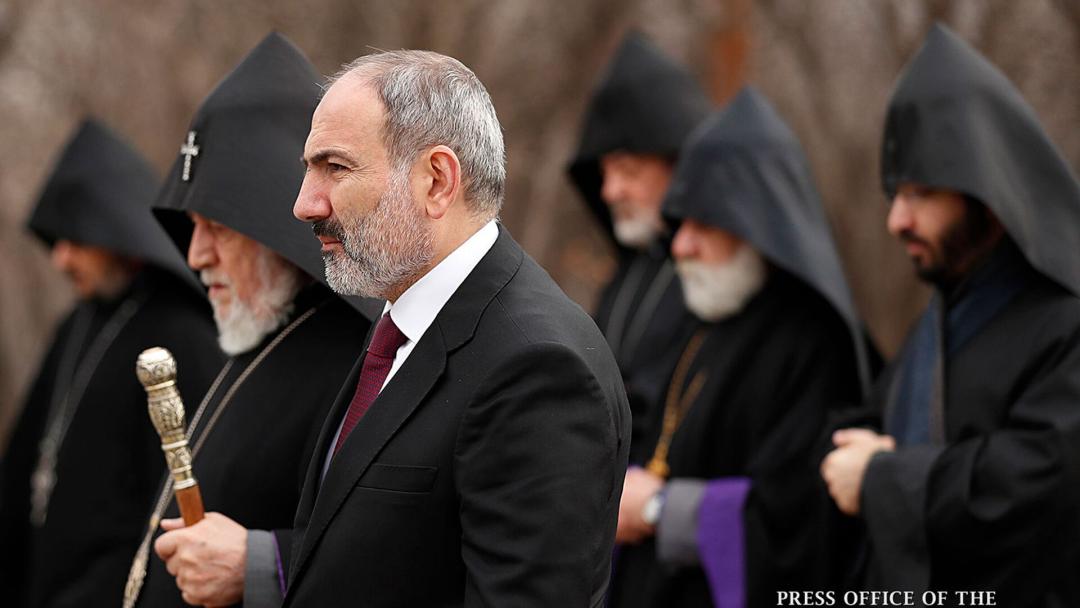
On June 22, Garegin II, the Catholicos of All Armenians, condemned the government’s anti-church campaign as a grave threat to national unity and Armenian statehood, while prominent figures and organizations criticized the politically motivated arrest of businessman Samvel Karapetyan and the government’s confrontational stance toward the Armenian Apostolic Church.
During a public address in the courtyard of the Cathedral, Garegin II stated that the ongoing persecution of Samvel Karapetyan, a national philanthropist, exemplified the authorities’ unjust actions. He emphasized, “Violence cannot build a country, and justice and harmony cannot be established in an atmosphere of threats and fear.”
Supporters of Karapetyan published the third part of his letter, in which he accused the current government of dismantling Armenia’s external security, severing ties with its principal ally and military partners, and offering the population “illusions about supposed crossroads of choice and dreams of peace.” He lamented the loss of Armenian Artsakh and claimed that territories of the Republic of Armenia were being ceded “piece by piece” under deceptive promises of a peace treaty. The letter further alleged that Armenia’s armed forces had been dismantled, leaving the country’s borders defended by a handful of observers with telescopes, and vowed, “Soon, our external security will be restored, and our dignity will be quickly revived. We will fight. To be continued.”
Garen Arevyan, the Chairman of the Armenian Community Council of Great Britain, asserted that Armenian Prime Minister Nikol Pashinyan’s campaign against the Armenian Apostolic Church was politically driven. Arevyan condemned the arrest of Karapetyan as “a desperate attempt” to maintain the government’s destructive policies and declared such an attack on the church unacceptable.
Rifat Fikri Said, the Chairman of the Council for Interchurch Dialogue and Ecumenical Relations of the Evangelical Synod of Nile and Deputy Secretary General of the Middle East Council of Churches, stressed that involving religious institutions in political disputes was unacceptable in any country. He emphasized the necessity of upholding the right to a fair defense for every defendant, reaffirming that all individuals are presumed innocent until proven guilty in court. “Religious institutions have a lofty spiritual mission. We hope that all people will be able to live in love and peace,” Fikri Said concluded.