
Armenia’s Engagement with the UN Sustainable Development Goals: A Legal and Policy Perspective
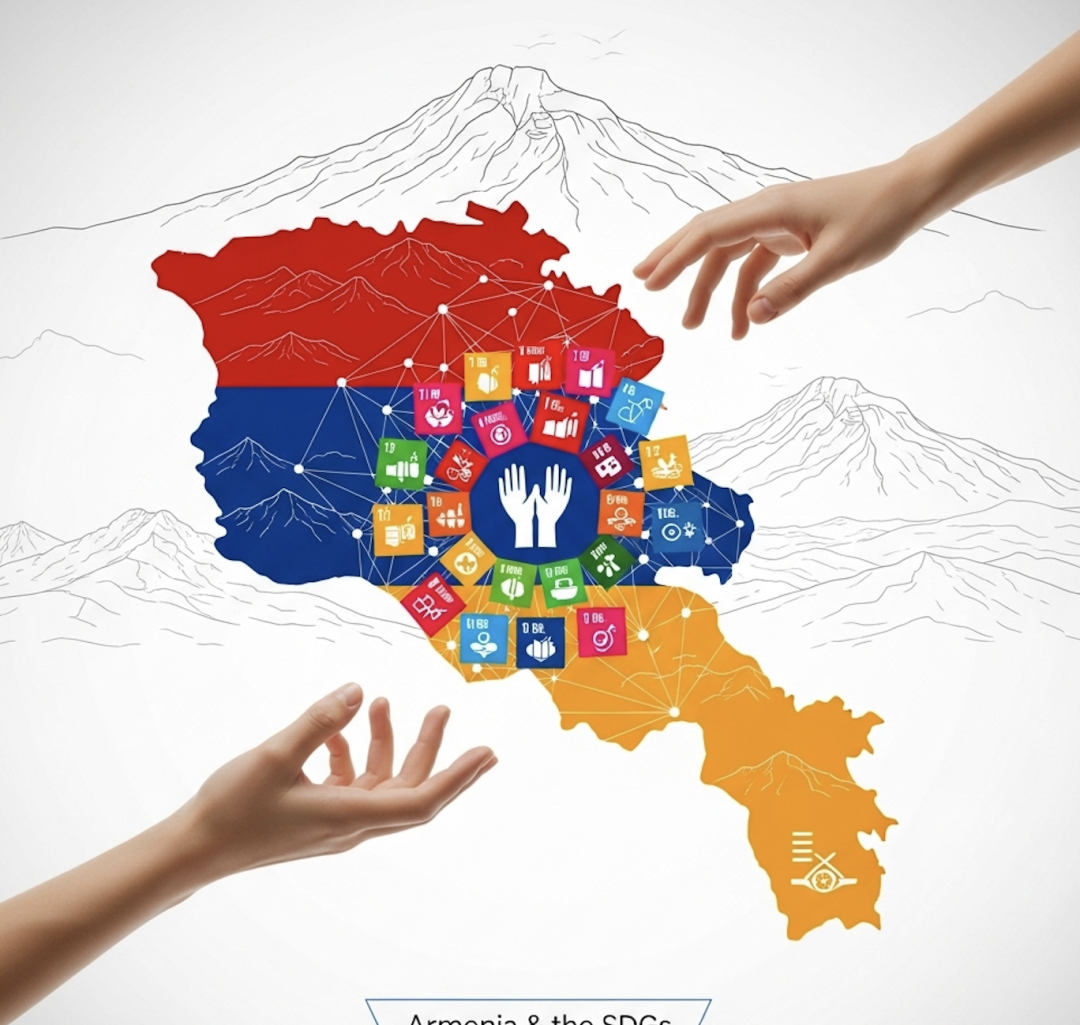
Introduction
Armenia has been firmly committed to the 2030 Agenda for Sustainable Development since its inception in 2015, actively working to integrate the 17 Sustainable Development Goals (SDGs) into national plans and reforms. An intergovernmental SDG council was established in 2015 to coordinate implementation. In 2018, a nonviolent political transition, known as the “Velvet Revolution,” ushered in a reformist government that reaffirmed Armenia’s commitment to the Sustainable Development Goals (SDGs). The country presented its first Voluntary National Review (VNR) at the UN High-Level Political Forum in 2018, followed by a second VNR in 2020 and a third in 2024, each assessing progress and challenges in SDG implementation. Armenia’s approach has emphasized “whole-of-government” and “whole-of-society” participation, engaging government ministries, civil society, academia, and international partners in SDG planning and monitoring.
This article provides a snapshot of Armenia’s engagement with all 17 Sustainable Development Goals (SDGs) from 2015 to the present, with a particular emphasis on the post-2018 period of accelerated reforms. It examines the legal and policy actions taken under each goal, highlights key achievements to date, and discusses persistent challenges. It also reviews the roles of key stakeholders, government bodies, non-governmental organizations, and international donors in advancing Armenia’s sustainable development. Data from official sources and national reports are incorporated to illustrate trends and gaps, and national strategies (such as the Armenia Transformation Strategy 2050) are analyzed to understand how Armenia’s long-term vision aligns with the SDGs. The analysis is structured by goal, concluding with an overview of cross-cutting challenges and the road ahead for Armenia’s SDG agenda.
National SDG Framework and Post-2018 Reform Agenda
Institutional Coordination: From the outset, Armenia created mechanisms to mainstream the SDGs into its national governance. In 2015, an Intergovernmental Council was established to develop the institutional infrastructure for implementing the SDGs. In 2019, following the change in government, this body was renewed and expanded under the Deputy Prime Minister, with a broader mandate to coordinate and monitor progress on the Sustainable Development Goals (SDGs). The National Council on Sustainable Development (as it is now called) includes representatives of all key ministries, state agencies, the Human Rights Defender’s Office, civil society, and academia, and even invites the UN Resident Coordinator and other international experts to participate. This inclusive coordination mechanism ensures high-level political support and multi-stakeholder engagement, reflecting a “whole-of-society” approach. The Council’s mandate is advisory, helping to align legislation, policies, and budgets with the Sustainable Development Goals (SDGs) and to track their implementation.
Strategic Planning: Armenia has integrated the Sustainable Development Goals (SDGs) into its long-term development strategies. Notably, the government is implementing the “Armenia Transformation Strategy 2020–2050” (ATS), a comprehensive roadmap for national development. This strategy defines 16 “mega-goals” for 2050 that essentially correspond to the SDGs (with the only exception of SDG 14 on marine resources, given Armenia’s landlocked status). Each mega-goal has associated targets, indicators, and actions, effectively localizing the global goals into Armenia’s context. For example, the ATS includes objectives such as eradicating extreme poverty, transitioning to a green economy, and building effective institutions, which align with SDGs 1, 8, 13, and 16, among others. The ATS serves as the umbrella framework under which sectoral strategies and reforms are aligned with sustainable development priorities. In parallel, the government’s mid-term development programs and annual budgets have increasingly referenced SDG targets to ensure policy coherence.
Integration with International Agreements: Armenia’s reform agenda has also been shaped by international partnerships that reinforce Sustainable Development Goal (SDG)- aligned goals. The Armenia-EU Comprehensive and Enhanced Partnership Agreement (CEPA), signed in 2017 and implemented after 2018, includes extensive commitments on governance, economic development, and environmental protection that are directly relevant to the Sustainable Development Goals (SDGs). Many of the reforms under CEPA – from judicial reforms to environmental standards – are mapped to SDG targets and indicators. Likewise, Armenia’s international commitments on climate change (the Paris Agreement) and human rights (e.g., conventions on women’s rights and child rights) inform its national SDG efforts. These frameworks ensure that Armenia’s domestic policies are informed by global best practices and supported by technical and financial assistance from development partners.
Monitoring and Data: Strengthening data collection and progress monitoring has been a priority. In 2018, Armenia adopted a new Law on Official Statistics, aligned with the UN's fundamental principles. The National Statistical Committee (ArmStat) has since launched a National Reporting Platform (NRP) for SDG indicators, which disseminates up-to-date data on each of the goals. This open platform allows tracking of Armenia’s performance on global SDG indicators and includes some customized national indicators. Data is disaggregated by sex, region, and other variables, where possible, to ensure no groups are left behind. These efforts address earlier gaps in subnational data; however, indicator data at the provincial or community level remain limited in some areas. The SDG monitoring process has been iterative: as new surveys and administrative data become available, Armenia updates its indicators and baselines, improving the evidence base for policymaking. Notably, an SDG Innovation Lab was established in 2017 as a joint initiative between the Government and the UN to develop innovative data tools and analytical approaches for the SDGs. Through such initiatives, Armenia is bolstering its capacity to measure progress and identify gaps.
Voluntary National Reviews: Armenia has prepared thorough Voluntary National Reviews that document its SDG journey. The first VNR (2018), presented just months after the governmental change, took stock of initial progress and challenges in “nationalizing” the SDGs. The second VNR (2020) provided a more in-depth assessment, noting significant reforms since 2018 and highlighting areas requiring acceleration. Preparation of the 2020 VNR was itself a broad-based exercise: almost all state bodies contributed information, and despite the COVID-19 disruptions, stakeholders (including NGOs and the private sector) submitted inputs online. The VNR process helped identify priority challenges, such as gaps in equality legislation, climate change adaptation, sustainable energy, and judicial reform. It encouraged Armenia to devise action plans to address them. By the time of the third VNR (2024), Armenia had faced new crises (war and a refugee influx in 2020–2023) but also registered notable economic and institutional progress. The 2024 VNR highlights Armenia’s resilience and continued commitment to the Sustainable Development Goals (SDGs), despite facing security and humanitarian challenges. It underscores that the SDG agenda has become an integral part of Armenia’s national reform narrative over the past decade.
Post-2018 Reform Momentum: The period following 2018 saw an intensified focus on SDG-related reforms, often described by officials as a “revolution of values” that aligns governance with people-centric development. Democratic governance improvements (free and fair elections, media freedom) created an enabling environment for sustainable development. The government’s program explicitly linked democratic progress to achieving SDG 16 (Peace, Justice, Strong Institutions. Anti-corruption measures, judicial overhaul, and human rights protections were pursued not only as political aims but also as prerequisites for equitable growth and social inclusion. Meanwhile, economic policies shifted toward more inclusive growth, focusing on raising minimum wages, expanding social programs, and investing in human capital, in line with the “leave no one behind” principle of the 2030 Agenda. For example, reforms targeting vulnerable groups were launched, including inclusive education for children with disabilities and programs aimed at reducing gender inequality. Armenia’s Prime Minister noted that the country’s 16 SDG-aligned mega-goals would guide sectoral strategies in areas like education, healthcare, and climate, ensuring a holistic approach.
Challenges and Context: Despite strong ownership of the SDGs, Armenia faces significant challenges in implementation. Being a landlocked, lower-middle-income country, it has resource constraints and is vulnerable to external shocks. The late 2020 war in the Nagorno-Karabakh region and subsequent security tensions created a humanitarian crisis, diverting attention and funds. A 10-month blockade in 2022–2023 and renewed conflict in September 2023 led to the displacement of over 115,000 ethnic Armenians to Armenia, the worst refugee crisis in Armenia’s modern history. These events strained public services and could undermine SDG gains in poverty reduction, health, and education if not managed. The government responded with a substantial 300 million dram (2% of GDP) socio-economic assistance package, including grants to SMEs, utility subsidies, and support for vulnerable groups, to mitigate the pandemic’s impact. While these measures helped contain a rise in poverty, they also highlighted the importance of building social protection systems that can withstand shocks. Environmental vulnerabilities, particularly climate-related risks such as droughts and floods, pose additional long-term challenges (addressed under SDG 13). In summary, Armenia’s SDG efforts are unfolding under complex circumstances, necessitating resilience and adaptive strategies.
The following sections analyze Armenia’s progress on each of the 17 SDGs in detail, focusing on the legal and policy measures adopted, the outcomes achieved, and the challenges that persist. Each section of the goal also notes the contributions of relevant stakeholders – from government ministries to NGOs and international partners – in advancing that aspect of sustainable development.
Table 1: SDG Implementation in Armenia: Key Achievements, Barriers, and Required Next Steps
SDG & Description | Progress | Challenges | Actions Needed |
SDG 1: No Poverty End poverty in all its forms everywhere |
|
|
|
SDG 2: Zero Hunger End hunger, achieve food security, improved nutrition, and promote sustainable agriculture |
|
|
|
SDG 3: Good Health and Well-Being Ensure healthy lives and promote well-being |
|
|
|
SDG 4: Quality Education Ensure inclusive and equitable quality education |
|
|
|
SDG 5: Gender Equality Achieve gender equality and empower all women and girls |
|
|
|
SDG 6: Clean Water and Sanitation Ensure access to water and sanitation |
|
|
|
SDG 7: Affordable and Clean Energy Ensure sustainable energy for all |
|
|
|
SDG 8: Decent Work and Economic Growth Promote inclusive growth and decent work |
|
|
|
SDG 9: Industry, Innovation, and Infrastructure Build resilient infrastructure and foster innovation |
|
|
|
SDG 10: Reduced Inequalities Reduce inequality within and among countries |
|
|
|
SDG 11: Sustainable Cities and Communities Make cities inclusive and sustainable |
|
|
|
SDG 12: Responsible Consumption and Production Promote sustainable consumption and production |
|
|
|
SDG 13: Climate Action Combat climate change and its impacts |
|
|
|
SDG 14: Life Below Water Conserve and use water ecosystems |
|
|
|
SDG 15: Life on Land Protect and restore ecosystems |
|
|
|
SDG 16: Peace, Justice, and Strong Institutions Promote just and inclusive societies |
|
|
|
SDG 17: Partnerships for the Goals Strengthen global partnerships for development |
|
|
|
Conclusion and Way Forward
Armenia’s engagement with the UN Sustainable Development Goals has been comprehensive and dynamic, especially in the wake of its 2018 democratic transformation. This research has shown how Armenia has mainstreamed the SDGs into its legal frameworks, national strategies, and institutional reforms, making sustainable development a guiding compass for its policies. Across all 17 Goals, Armenia has registered notable achievements: significant poverty reduction and social inclusion measures (SDG 1, SDG 10), advances in healthcare, education, and gender equality (SDG 3, 4, 5), a clear trajectory toward clean energy and climate action (SDG 7, 13), strengthened protection of terrestrial ecosystems (SDG 15), and markedly improved governance and anti-corruption efforts (SDG 16) that underpin the entire SDG agenda. The country has leveraged broad partnerships – government, civil society, diaspora, and international donors – in a “whole-of-society” approach that has accelerated progress.
Equally, this review identified persistent challenges that Armenia faces. The COVID-19 pandemic and the 2020 Nagorno-Karabakh war dealt setbacks to some Sustainable Development Goals (SDG) gains, revealing vulnerabilities in areas such as health system capacity, economic resilience, and regional peace (SDG 3, 8, 16). Geographic disparities and structural issues mean that rural communities and certain vulnerable groups still lag behind national averages, necessitating continued targeted interventions (SDG 1, 9, 10). Environmental constraints – from climate change impacts on water and agriculture to pollution and biodiversity threats – will demand sustained attention and investment (SDG 6, 13, 15). The external political environment remains a key uncertainty; sustainable development in Armenia is inextricably linked to the pursuit of a stable and just peace in the region (SDG 16). Nonetheless, Armenia’s experience since 2015, especially in the post-2018 period, has demonstrated resilience and adaptability. Even under pressure, Armenia has endeavored to “build back better,” using crises as catalysts for reform – whether it be digitalizing services during the pandemic or redoubling efforts to solidify anti-corruption and judicial reforms, thereby strengthening public trust.
Moving forward, Armenia’s pathway to 2030 will involve deepening the implementation of existing strategies and closing gaps identified in its SDG reviews. The upcoming Armenia 2024 Voluntary National Review is expected to highlight lessons learned and outline priority actions for the next phase. Likely emphases include: accelerating green growth and job creation to reduce poverty further (SDG 8, 1), completing the universal health insurance rollout to protect health for all (SDG 3), fully institutionalizing gender equality gains (SDG 5), expanding climate adaptation projects at community level (SDG 13), and enhancing the quality of education and innovation to drive long-term development (SDG 4, 9). Cross-cutting will be the need to secure financing – Armenia may develop an integrated SDG financing strategy, linking government budgets, diaspora bonds, private investments, and donor funds to specific SDG outcomes (SDG 17).
Crucially, stakeholder collaboration will remain the linchpin of success. Armenia’s government will continue to coordinate closely with its ministries, the National SDG Council, and local authorities to ensure policy coherence and effective delivery of services (SDG 16.6). Civil society and youth will continue to play a vital role in monitoring and advocating for the SDGs, holding authorities accountable, and bringing community-level insights into policymaking. The international community, comprising the UN Country Team, global financial institutions, and bilateral partners, is poised to support Armenia with expertise, funding, and platforms for knowledge exchange. For example, UNDP’s extensive portfolio in Armenia (covering climate, innovation, and inclusion) will be aligned with national priorities to maximize impact. The EU’s External Investment Plan and other donor initiatives are likely to channel more investments into Armenia’s sustainable infrastructure and human capital.
In sum, Armenia’s legal and policy trajectory vis-à-vis the SDGs from 2015 to 2025 reflects a story of commitment and continuous improvement. The country has adopted the SDGs not as a tick-box exercise, but as a transformative blueprint that is deeply intertwined with its national development vision. There have been clear improvements in governance, social welfare, and environmental management, many of which are directly linked to reforms accelerated after 2018. Challenges persist, as expected in such an ambitious agenda, but Armenia’s capacity to identify these challenges through honest assessment and to address them through inclusive, evidence-based policies gives reason for optimism.
As Armenia enters the second half of the SDG timeline, it does so with stronger institutions and a clearer sense of direction. The remaining years to 2030 will be used to consolidate gains and bridge gaps, ensuring that no one is left behind – whether it is the remote farmer adapting to climate change, the small business owner seeking equal opportunity, or the displaced family rebuilding their lives. Suppose Armenia maintains its reform momentum and leverages the full potential of partnerships. In that case, it is well on track to fulfill the SDGs and, in the process, build a more prosperous, just, and sustainable future for all its citizens. The Armenian case thus illustrates how a country can translate the global goals into tangible progress at home through legal commitment, policy innovation, and unwavering dedication to the principle of sustainable development.
Sources:
- United Nations. (2020). Voluntary National Review 2020: Sustainable Development Goals Progress Report at the High-Level Political Forum: Armenia (UN Digital Library No. 3905789). https://digitallibrary.un.org/record/3905789?ln=en&v=pdf
- Armstat. (2025, May 8). Indicators for the Sustainable Development Goals. National Statistical Committee of the Republic of Armenia. https://sdg.armstat.am/
- World Bank. (2025, April). Armenia poverty & equity brief: April 2025 (Report No. IDU‑248d285b‑298a‑4005‑b0de‑c518655f4186). World Bank. https://documents1.worldbank.org/curated/en/099330204212511224/pdf/IDU-248d285b-298a-4005-b0de-c518655f4186.pdf
- Transparency International. (2024). Corruption Perceptions Index 2023 [PDF]. Transparency International. https://images.transparencycdn.org/images/CPI-2023-Report.pdf
- United Nations High-Level Political Forum. (2024). Voluntary National Review 2024: Armenia [PDF]. United Nations. https://hlpf.un.org/sites/default/files/vnrs/2024/VNR%202024%20Armenia%20Report.pdf
Authors:
Verej Isanians, Ph.D., CEO, Nexus Intellect Research, https://orcid.org/0009-0008-1145-9251