
Ilham Aliyev Addresses Media: Resetting US Ties, Expanding Global Partnerships, and Regional Strategy
Source: president.az
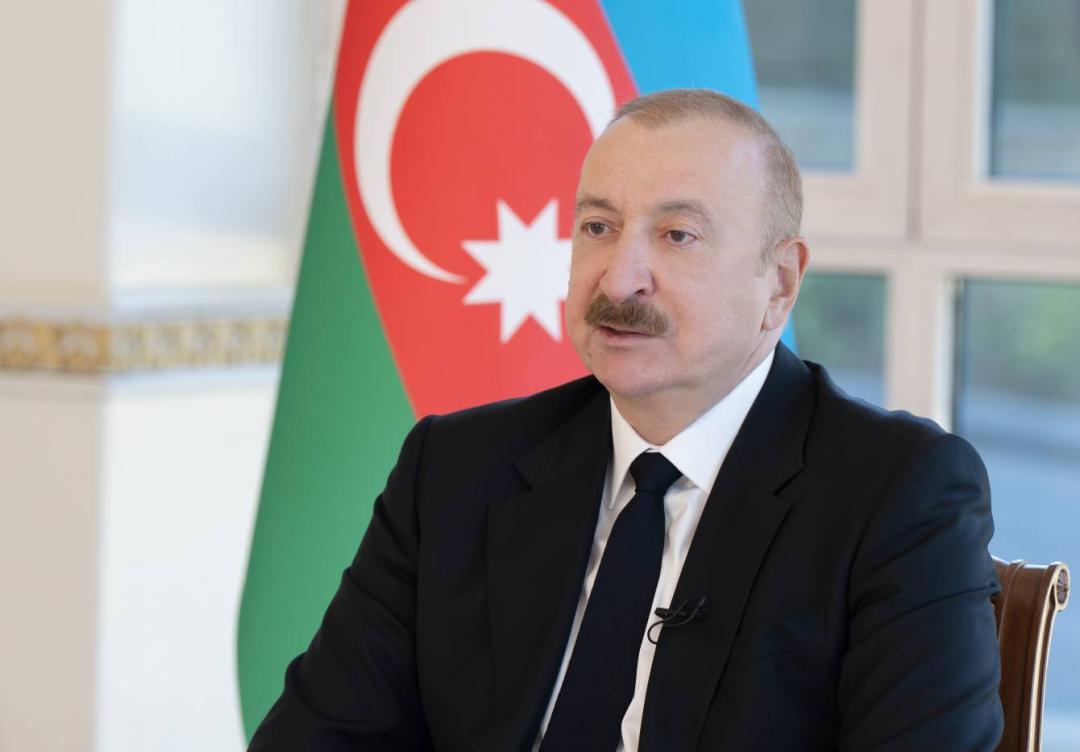
During an interview with local journalists on January 5, Ilham Aliyev, the President of Azerbaijan, characterized 2025 as a defining chapter in Azerbaijan’s modern history. He stated that battlefield victory has transitioned into political peace, strained alliances have shifted, and new global bridges have been formed, setting the state’s course toward security, prosperity, and national identity. The president noted that 2025 could be regarded as a historic year because the Azerbaijan–Armenia war has concluded politically and the country has lived under peaceful conditions for several months.
Aliyev emphasized that Azerbaijan is learning what peace means in practice, noting that the "brilliant Victory" achieved on the battlefield has received a political seal in the international arena, including from the world’s most prominent institutions. He stressed that this period will remain among the most memorable moments of Azerbaijan’s independence and expressed confidence that the Azerbaijani people will continue to live in peace.
Aliyev stated that 2025 was also a historic year in the context of Azerbaijan–US relations, explaining that the Section 907 amendment—adopted due to the activities of anti-Azerbaijani forces and the Armenian lobby in the United States—had long obstructed the development of full-scale bilateral relations. He emphasized that the restriction was removed due to two main factors: the official end of the Azerbaijan–Armenia war and the change of administration in the United States. He highlighted the symbolic importance of US President Donald Trump signing the waiver of Section 907 at a White House ceremony attended by the Azerbaijani leader, and stated that members of the Trump administration are pragmatic officials who clearly understand America’s national interests. He contrasted this with previous administrations, stating: "Relations with the Obama-Biden administration were quite distant, while the Biden-Blinken administration had effectively plunged our relations into a crisis".
The president recalled that Azerbaijan has worked for many years to secure the repeal of Section 907, noting that the waiver was applied only after the events of September 11, 2001, and continued until 2024. He stated that the Biden administration halted the waiver after the end of the Afghanistan mission, adding that this demonstrated how "ungrateful and ungracious the Biden-Blinken administration was". Responding to questions about future expectations, Aliyev emphasized that Azerbaijan–US relations have entered a new phase and expressed hope that Congress will fully repeal the amendment, which he described as "a relic of the past that is completely absurd today". He underlined that the original justification for the amendment no longer exists, as roads have been opened and goods, including Azerbaijani petroleum products, are already being transported to Armenia through Azerbaijani territory.
During the interview, Ilham Aliyev highlighted Azerbaijan’s strategic partnership with China, recalling that a Joint Statement on Comprehensive Strategic Partnership was signed during his state visit to Beijing. He emphasized that this framework reflects successful diplomacy and noted that bilateral trade has exceeded $4 billion, while Chinese companies have begun investing in renewable energy, transport, and other sectors. Aliyev also described Azerbaijan’s accession to the D-8 organization as a major achievement, stressing that it is the first country admitted since the group’s establishment.
He emphasized the importance of Central Asia–Azerbaijan cooperation and the transformation of the C5 into C6, stating that Azerbaijan is the only geographically reliable link between Central Asia and the West under current geopolitical conditions. Addressing security issues, Aliyev stated that global developments require countries to strengthen their military potential, recalling his proposal for joint military exercises within the Organization of Turkic States. He emphasized both the symbolic and practical value of such cooperation and stated bluntly that "There is no such thing as international law in today’s world".
The president underlined Azerbaijan’s ambitions to become a regional Artificial Intelligence and IT hub, noting ongoing work on data centers, cybersecurity infrastructure, and specialist training. He emphasized that a strong political will exists and stated that American companies are viewed as key partners in this field. Aliyev also noted that Azerbaijan has strategically increased its gold reserves amid geopolitical uncertainty, emphasizing that the decision has generated more than $10 billion in additional income for the State Oil Fund.
Discussing social and economic policy, he emphasized the balance between investment and social spending, noting that revenues from energy projects have primarily been directed toward social needs. Aliyev outlined major infrastructure plans for the liberated territories, emphasizing connectivity between regions and the integration of Karabakh, East Zangezur, and Nakhchivan. He stated that Khankendi and Aghdam will become key urban centers and noted that tens of thousands of people have already returned to live and work in these areas.
The president emphasized that regional transport projects will benefit not only Azerbaijan but also Armenia, stating that reopened roads and railways will help Armenia emerge from its current deadlock. Addressing defense policy, he emphasized continued army building after the Second Karabakh War, noting that victory did not eliminate the need for reform. He stated that Azerbaijan has expanded private-sector participation in the defense industry, noting that 15 companies have been licensed and that private firms have already begun production. He emphasized that military output has reached 1.4 billion manats, with exports to around 20 countries.
Commenting on international law, Aliyev emphasized that Azerbaijan was among its earliest victims, recalling that four UN Security Council resolutions on Armenian troop withdrawal had remained unimplemented for 27 years. He dismissed the possibility of Azerbaijan’s participation in international "peace enforcement" missions in Gaza, emphasizing that Azerbaijan does not intend to risk the lives of its citizens abroad. He stressed that the issues of Arab countries should be resolved by Arab states themselves.
The president also detailed Azerbaijan’s renewable energy plans, noting approved solar and wind projects on land and at sea, including in the liberated territories. He emphasized that by 2032 the country aims to integrate up to 8,000 megawatts of renewable energy, requiring major upgrades to the national energy grid and battery storage systems. Regarding energy exports, he emphasized that Azerbaijan supplies pipeline gas to 14 countries, with plans to expand to 16, noting that no other country matches this geographical reach. He stressed that exports have exceeded 25 billion cubic meters and retain strong growth potential.
Concluding the interview, Aliyev emphasized the importance of protecting the Azerbaijani language, stating that linguistic integrity is inseparable from national identity and statehood. He warned that the excessive use of foreign words weakens cultural foundations and stressed that safeguarding the language is a shared responsibility of society.