
Pashinyan Highlights Trade, Digitalization, Tourism, And Thanks Azerbaijan for Unblocking Transit in EAEU Meeting
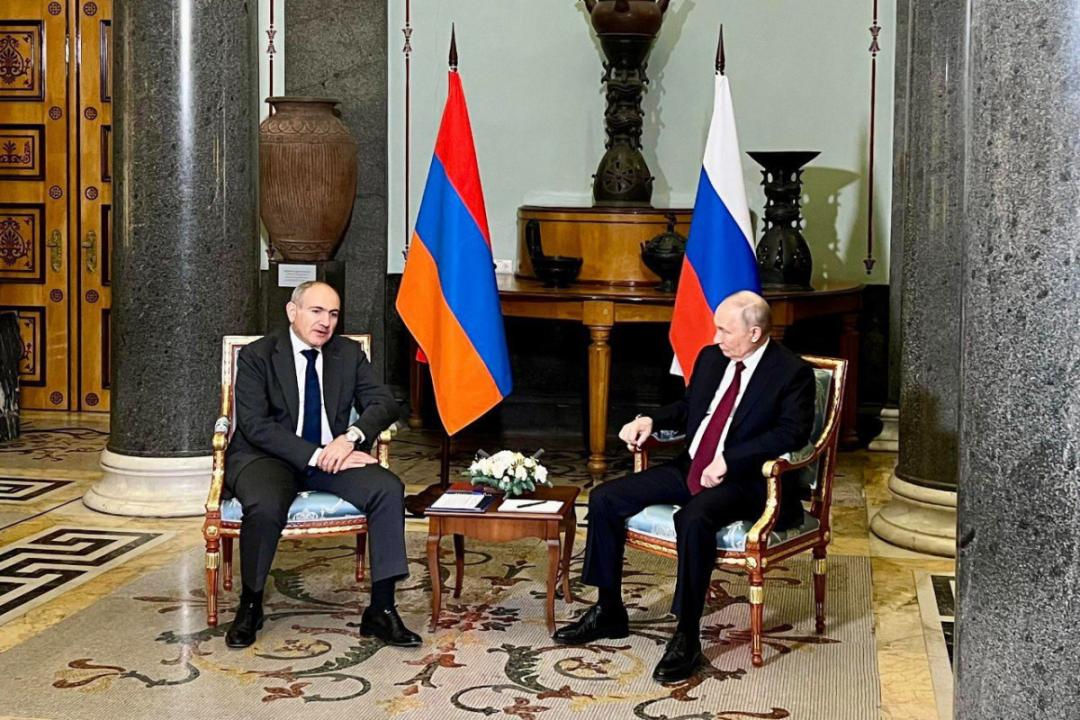
On December 21, Russian President Vladimir Putin opened a meeting of the Supreme Eurasian Economic Council in St. Petersburg. During the meeting, Putin emphasized that Russia highly values mutually beneficial, multifaceted cooperation with EAEU partners and is committed to intensifying efforts to strengthen the union.
The session began in a restricted format and continued in an expanded format, with participants discussing current EAEU issues, outlining guidelines for deepening integration, developing the Union's single market, and approving key documents, including the anticipated signing of a Free Trade Agreement between the Eurasian Economic Union and Indonesia. Imangali Tasmagambetov, the CSTO Secretary General, stated in an interview with TASS that Armenia has been and remains an ally in the Collective Security Treaty Organization.
"We hope that Armenia will return to full participation in the CSTO in the foreseeable future. All the conditions and prerequisites for this exist: we believe that the people of Armenia are interested in creating a common security space in Eurasia," he said. Responding to questions on Armenia's withdrawal from the CSTO, he noted that the republic had paused its work in the organization, reflecting the current stance of Armenia's political leadership, which he emphasized is the decision of an independent and sovereign state.
During the expanded session of the Supreme Eurasian Economic Council, Nikol Pashinyan, the Prime Minister of Armenia, expressed gratitude to Azerbaijani President Ilham Aliyev for unblocking cargo transit to Armenia through Azerbaijan. Pashinyan highlighted the strategic importance of this step for regional peace and stability. He also thanked Putin for hosting the meeting and congratulated Kazakhstan on its upcoming chairmanship.
Pashinyan emphasized the achievements of Eurasian economic integration through 2025 and stressed the need to delineate national competencies while applying supranational mechanisms to ensure sustainable integration. He noted the expansion of international cooperation with partners such as Iran, the UAE, Mongolia, China, and India, while welcoming the signing of free trade agreements with Indonesia. He underscored the importance of constructive dialogue with observer states interested in engaging with the EAEU.
The Armenian Prime Minister outlined priorities for the internal market, including the removal of barriers, digitalization, simplification of regulatory procedures, and creating a level playing field for economic participants. He called for commissions and governments to continue addressing sensitive issues through mutually acceptable agreements. Pashinyan also highlighted trade and logistics cooperation guided by reciprocity, equality, sovereignty, and national jurisdictions, noting that favorable regional changes are creating new opportunities and strengthening economic resilience.
Pashinyan underlined the growing role of the service sector in EAEU economies, its contribution to GDP and employment, and the benefits of a single services market. He emphasized digitalization as essential for sustainable development and e-commerce, noting that this year saw consensus on key e-commerce regulations and the implementation of mechanisms creating predictable conditions for market participants. He also stressed the importance of transparency and traceability in goods movements, digital integration of fiscal systems, improved tax administration, reduced shadow trade, and fair competition protection.
Tourism was another focus, with Pashinyan noting that the new development concept will boost mutual tourist flows and have a multiplier effect on EAEU economies. In conclusion, he reaffirmed Armenia’s readiness for mutually beneficial cooperation within the EAEU, wishing all participants success in 2026 and peace, prosperity, and well-being for their peoples.