
Pashinyan's Visit to Germany: High-Level Meetings, Joint Declaration, EU Integration, Peace with Azerbaijan, Armenia-Türkiye Normalization and TRIPP Route
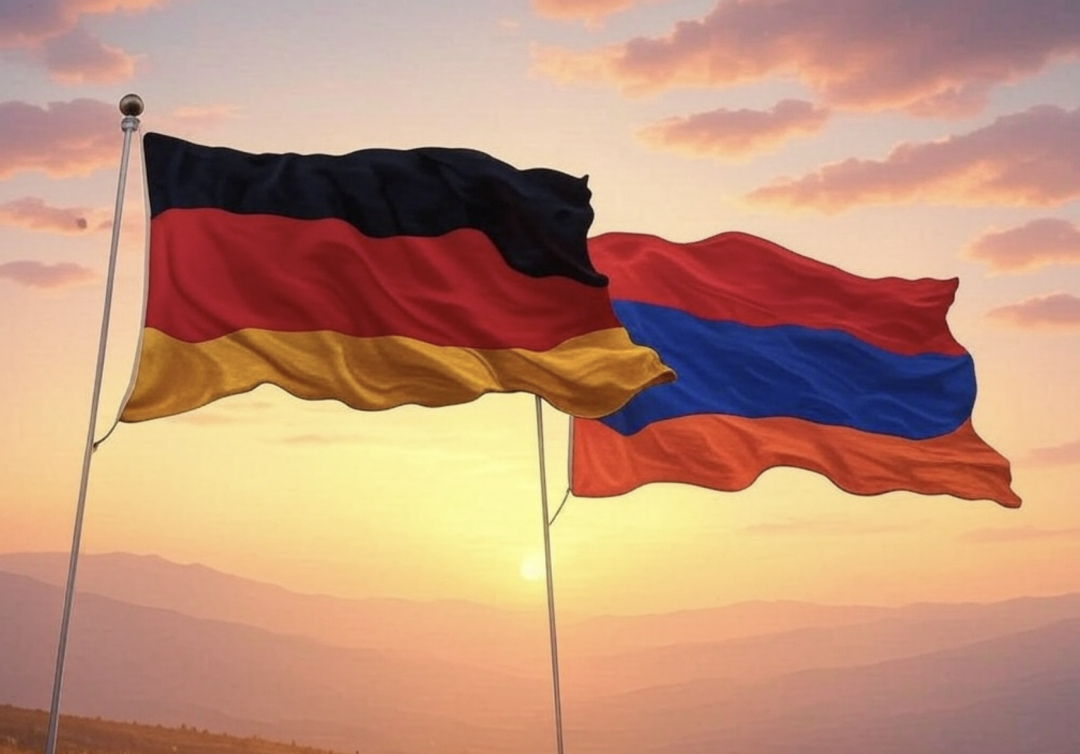
On December 9, Armenian Prime Minister Nikol Pashinyan embarked on a historic visit to Germany. He engaged with President Steinmeier and Chancellor Merz to sign a strategic partnership declaration, discuss Armenia’s EU integration, the Washington peace agreements with Azerbaijan, and regional transport initiatives like TRIPP and the Crossroads of Peace. He also spoke at the German Council on Foreign Relations amid diaspora protests, highlighting Armenia’s vision for peace, connectivity, and economic and cultural cooperation.
Meeting with President Steinmeier
Pashinyan met with Frank-Walter Steinmeier, the President of Germany, in Berlin, beginning with a private discussion followed by expanded talks. Steinmeier welcomed the visit and emphasized Germany’s readiness to strengthen ties, expressing confidence that the visit would invigorate bilateral cooperation. Pashinyan noted Germany’s role as a key ally for Armenia both bilaterally and within the EU framework. He highlighted shared commitments to human rights, democracy, and the rule of law. Discussions covered bilateral relations, the expansion of Armenia-EU cooperation, the significance of the upcoming European Political Community (EPC) Summit in Armenia, and regional issues, including peace with Azerbaijan.
Meeting with Chancellor Merz and Joint Declaration
The Prime Minister later met with Friedrich Merz, the Federal Chancellor of Germany. The leaders reaffirmed the long-standing friendly relations and their readiness to deepen cooperation based on mutual trust, shared values, and common interests. They discussed the recent growth in trade turnover and expressed hopes for continued economic progress. The meeting also addressed the strategic agenda of the Armenia-EU partnership, focusing on political dialogue, security cooperation, countering cyber threats and disinformation, and strengthening economic, cultural, and scientific ties.
Merz welcomed Armenia’s deepening relations with the EU and highlighted the recent positive developments in Armenia-Azerbaijan normalization as a step toward lasting peace. Both leaders noted that full normalization of relations with Azerbaijan and Türkiye could open new opportunities for a peaceful and prosperous South Caucasus.
Following the meeting, Pashinyan and Merz signed a joint declaration on the strategic agenda of bilateral partnership. The declaration recognized mutual trust and shared values, and highlighted commitments to democracy, human rights, and the rule of law. It referenced the Armenia-EU Comprehensive and Enhanced Partnership Agreement (CEPA) and outlined cooperation in political, economic, security, and cultural fields. The declaration is not an international treaty and allows for future amendments.
Media Statements and Protests
During statements to the media, Chancellor Merz congratulated Armenia and Azerbaijan on the peace agreement and highlighted agreements on transit and communications from Washington in August 2025. He stressed Germany’s support for Armenia’s resilience and reforms, describing them as essential for attracting investment. Merz also praised Armenian educational initiatives, such as the opening of TUMO Centers in Germany.
Pashinyan described the visit as historic, marking the advancement of Armenia-Germany relations into a strategic partnership. He highlighted cooperation across various sectors and praised Germany’s support for Armenia’s democratic reforms. Pashinyan discussed the Washington Peace Summit outcomes, noting new opportunities for regional projects like the "Crossroads of Peace" and the "TRIPP" program. He emphasized Armenia’s commitment to deepening relations with Germany and the EU, underlining the importance of political support for Armenia’s European integration aspirations.
Separately, representatives of the Armenian community held a protest against Nikol Pashinyan in Berlin, chanting, "Nikol is a traitor."
Remarks in German Council on Foreign Affairs
On the same day, Prime Minister Pashinyan visited the German Council on Foreign Affairs. In his speech, he contrasted the topic of his previous visit—"Security and stability in the South Caucasus"—with the current one: "Armenia’s perspectives on peace institutionalization, regional connectivity and relations with the EU," highlighting the historic developments in the region.
Pashinyan emphasized that on August 8, in Washington D.C., Armenia and Azerbaijan established peace by signing a Joint Declaration with the President of Azerbaijan, witnessed by US President Donald Trump. Both countries committed to closing the chapter of enmity, respecting the UN Charter and the 1991 Almaty Declaration, and rejecting any attempts at revenge. The Prime Minister noted that the Ministers of Foreign Affairs, along with the three Presidents, initialed the Agreement on the Establishment of Peace and Inter-State Relations.
A key breakthrough highlighted was the agreement to open communications between Armenia and Azerbaijan for all transportation, while respecting sovereignty and territorial integrity. This includes unimpeded connectivity between Azerbaijan’s main territory and Nakhchivan Autonomous Republic through Armenia, offering reciprocal benefits for Armenia’s connectivity. Pashinyan noted that the Armenian-American joint venture, TRIPP Company, would manage infrastructure development, aiming to begin construction next year. He stated that this initiative aligns with the "Crossroads of Peace" plan and has the potential to become a crucial part of the Middle Corridor.
Pashinyan also informed that Azerbaijan lifted restrictions on the transit of goods to Armenia in October, allowing grain shipments from Kazakhstan through Azerbaijan and Georgia. Armenia is politically and technically ready to facilitate transit between Türkiye and Azerbaijan. He stated that continued adherence to the Washington Declaration would help institutionalize lasting peace.
Regarding Armenia-Türkiye relations, Pashinyan emphasized the intensification of contacts and expressed hope that Türkiye would soon open its border and establish diplomatic relations. He stated that peace with Azerbaijan, Armenia-Türkiye normalization, the TRIPP Route project, and constructive ties with neighboring countries could transform the South Caucasus into a major transit corridor.
Pashinyan highlighted Armenia’s EU integration efforts, referencing the "Law on Initiating the Process of Armenia's Accession to the European Union" adopted by the National Assembly in March. He emphasized that the law encourages democratic reforms and compliance with EU standards. He added that the "Strategic Agenda of the Armenia–EU Partnership" complements the existing CEPA and opens opportunities for sectoral integration. He also noted progress in the Visa Liberalization Dialogue with the European Union, stating that the Action Plan outlines a path for a future visa-free regime.
Following the speech, Prime Minister Pashinyan participated in a panel discussion titled "Armenia's Vision for Peace Institutionalization, Regional Connectivity, and EU Integration."
News,
Politics,
Armenia |
Germany, Nikol Pashinyan, Donald Trump, Frank-Walter Steinmeier, Friedrich Merz, TRIPP, Armenia-Germany Relations