
Displaced Lives: A Sense of Optimism Despite Daily Challenges in Aravus
Early in the morning, a platoon of soldiers stands on the road leading to the Tegh community in Syunik. Their commander, holding a metal stopwatch, gives a command, after which two soldiers race each other across a 50-meter track. Nearby, others jump on the spot to stay warm, as the temperature has already dropped to zero and the surrounding mountains are covered in snow.
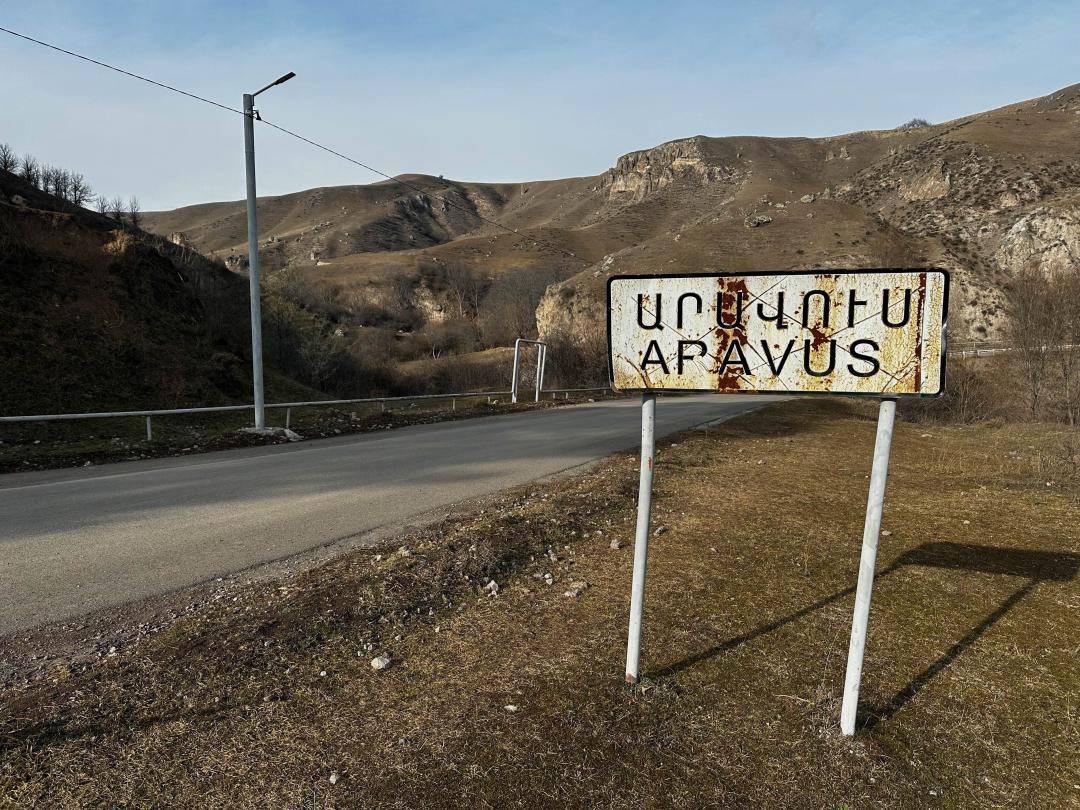
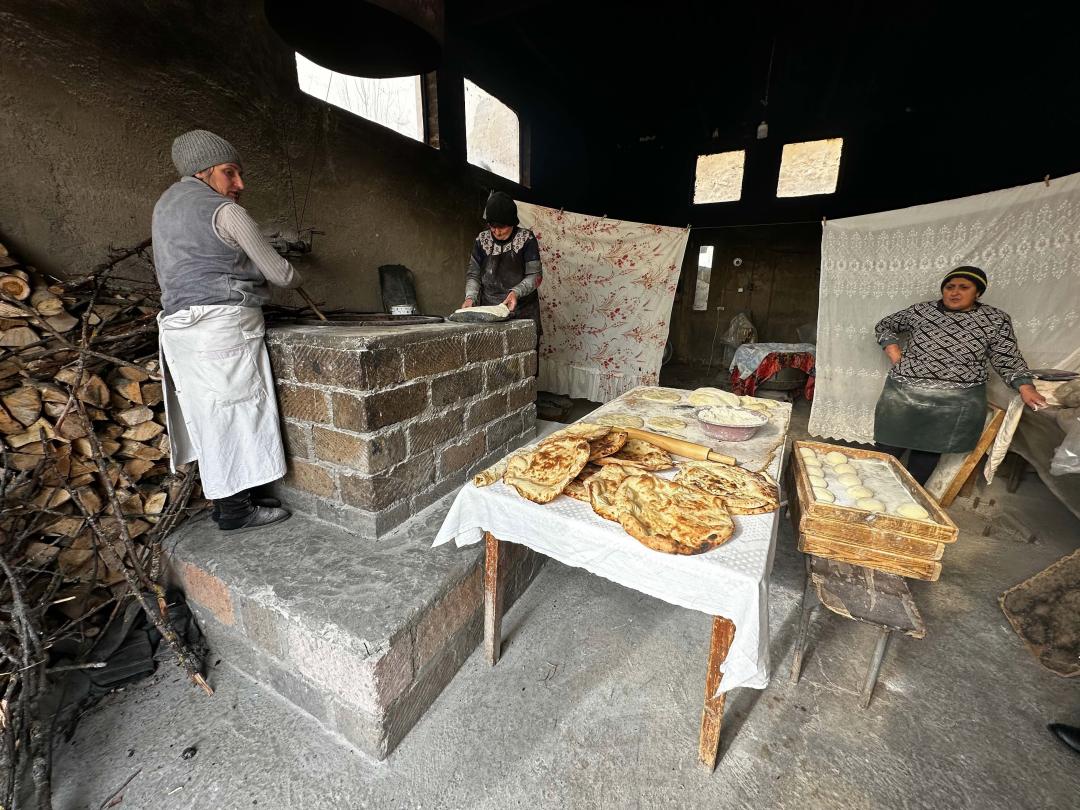
Among those who wake up early are the women from a small bakery on the same road. They bake fresh lavash in a place that is widely considered the most welcoming spot during the cold winter months. To reach the village of Aravus within the same community, one must walk two kilometers off the main road, as there is no public transport available.
As you approach the village, you are often met by shepherd dogs with cropped ears. Since the village rarely receives guests, the residents let the dogs roam freely to guard both the people and their livestock.
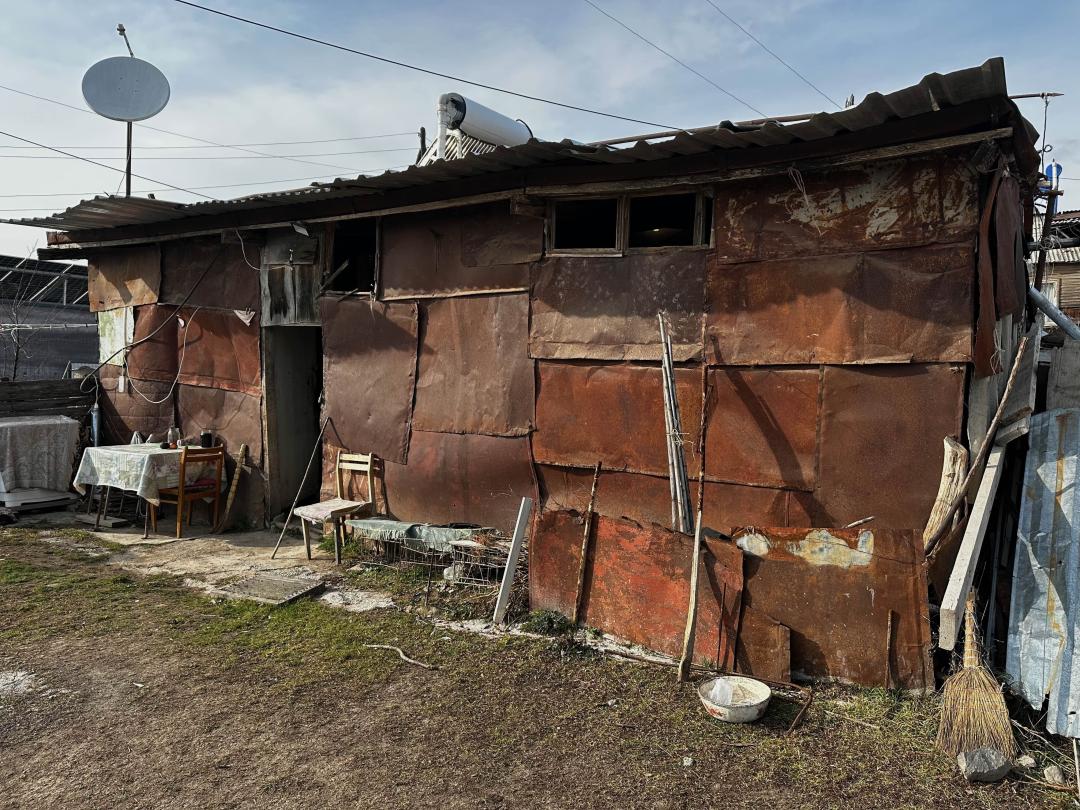
"No one comes to our village except the Red Cross," says Mrs. Ella, who lives in a domik—a temporary structure well-known to Armenians. She lives there with her husband, Valery. While domiks like Ella's first appeared in Armenia after the 1988 earthquake and some people still inhabit them today, Ella and her husband live in one for a different reason: they are refugees from Nagorno-Karabakh. More precisely, they are originally from this very village in Armenia, but until the 2020 war in Nagorno-Karabakh, they had lived in Lachin for 30 years. Having returned to their native village only during the 2023 exodus, they now find themselves without a home. Thinking they would live in Nagorno-Karabakh forever, they had sold their property in Aravus years ago; as a result, they have no home in Lachin today, nor in their native Aravus.
People in Syunik are mainly skeptical about the possibility of peace between Armenia and Azerbaijan. "What do I need Azerbaijani petrol for? It doesn't matter. My car runs on liquefied gas. Our government is just selling Armenian territories to Azerbaijan. I don't know what will happen in the end or how long this relative peace will last," a local says sarcastically. However, Ella and her husband remain positive, insisting that it is peaceful now and they no longer hear gunshots. They are more worried about social problems. Ella and Valery Matevosyan are living paycheck to paycheck. “I've been waiting all month for my pension so we can at least buy medicine,” says Valery. Back in the spring, reports of border incidents were coming from this very village, disseminated by the Armenian Ministry of Defense. Approximately 30 families live in the village.
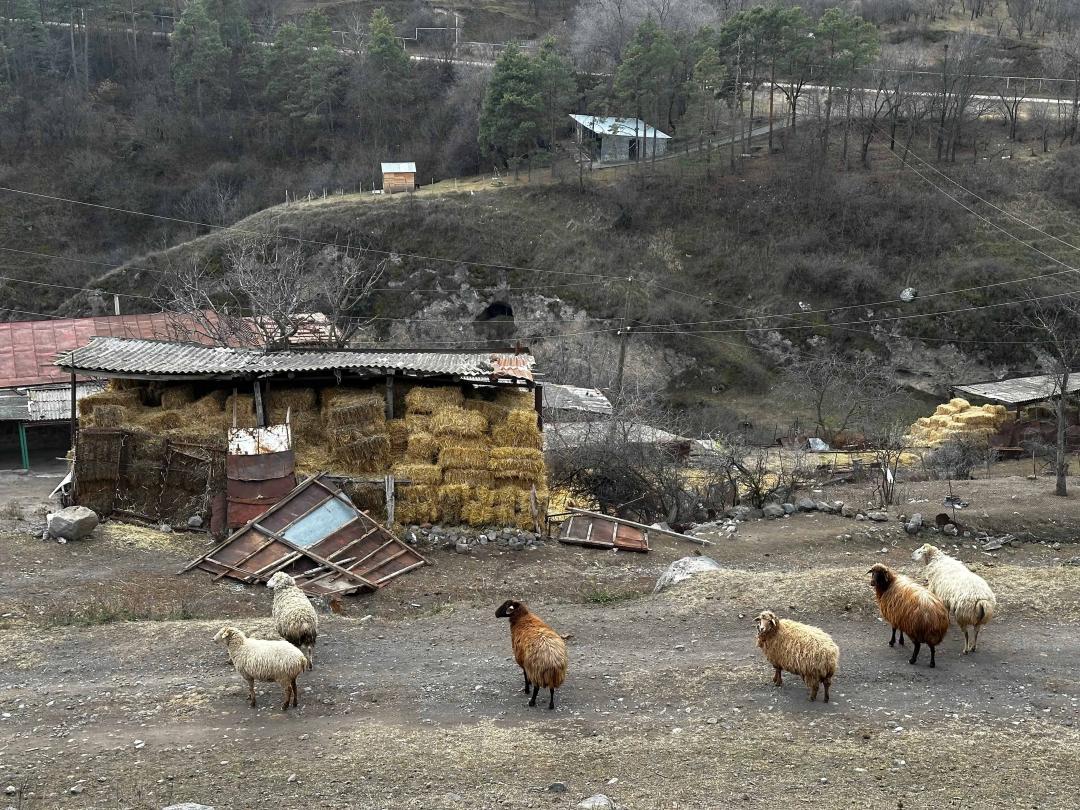
Valery remembers the Soviet years and his Azerbaijani friends with nostalgia. “At that time, I was the head clerk of the farm. For three years, I drove the sheep to Horadiz. I had very good Azerbaijani friends there. They welcomed me so warmly; imagine, they even took their sheep out of the barn so that mine could enter. The climate there is warm and the pastures are good. I would take the sheep there in the winter and bring them back in the spring. They treated me like a family member. I was surprised. It was over a hundred kilometers on asphalt, but it was shorter through the fields, and I drove through the fields. When I went by car, they would fill my tank with petrol without charging me a penny. They said, 'You are our guest; you should be treated in a special way.' One day, one of my Azerbaijani friends brought so many grapes that I didn't know what to do with them. I had to sell them, and I remember making a profit of 800 rubles, which was a huge sum at the time. For three years, I periodically visited Horadiz, and my Azerbaijani friends visited me in Aravus, until the Karabakh movement began in 1988 and everything was turned upside down. The situation was already tense; my Azerbaijani friends said they would bring my sheep closer to the border so that I could drive them to our village, but it was already risky and I was afraid. Of course, I trusted my friends, but I feared that other Azerbaijanis might attack me—it was real chaos then. I had a hundred sheep; half were mine, half belonged to my brother. So, the sheep stayed there, and we stayed here,” Valery recalls.
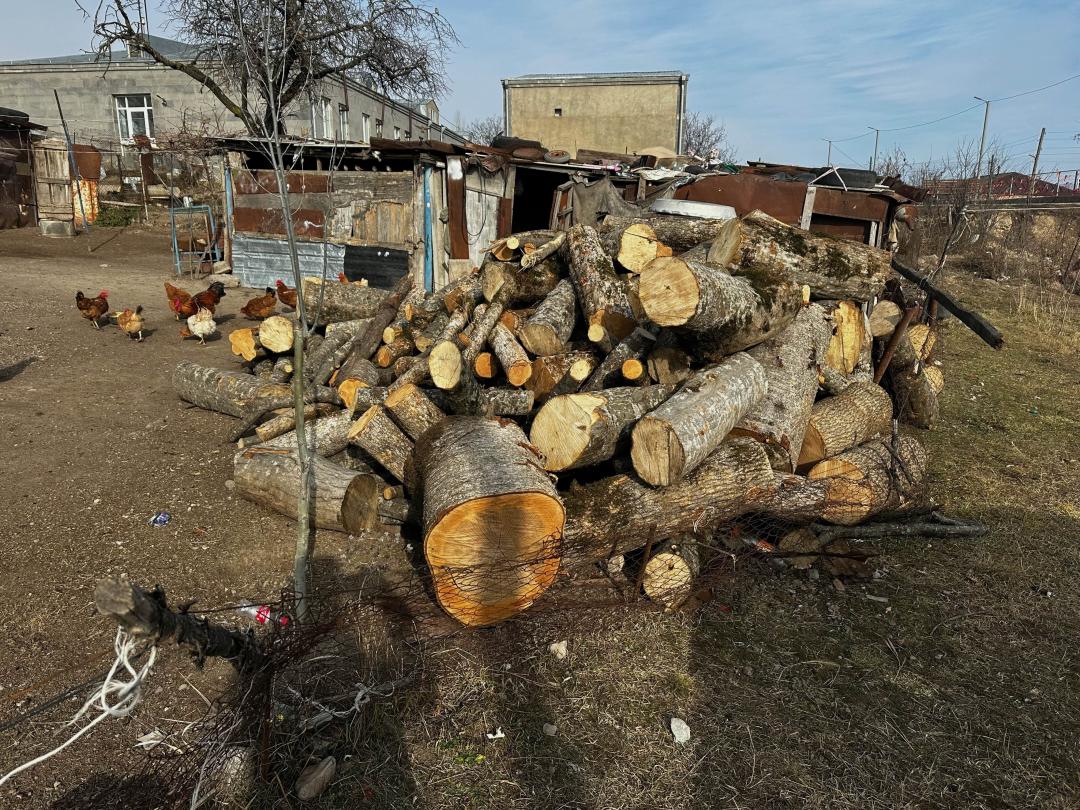
Almost the same story was repeated for Valery in 2023 when they left Nagorno-Karabakh. “We had 30 more cows, but we couldn't bring them; we let them free, barely fit ourselves into a truck, and got out. If we could have brought our livestock, we could have sold them to have some money in the bank for living expenses, and we wouldn't be in this dire situation today,” says Valery’s wife, Mrs. Ella. The Red Cross has opened a medical center in the village, but Mrs. Ella says they are not provided with the necessary medicines. There is no grocery store in the village, and to buy food they have to go to the nearby town of Goris, which is expensive because they must pay for a taxi. A thin gas pipe enters the village, but those living in domiks, like Mrs. Ella and Valery, cannot install it because it is dangerous and expensive; therefore, they rely on buying wood.
“I told the wood seller I could only pay for two square meters, but he was my friend's son, so he gave me four and said I could pay when I could. The pension is barely enough for medicine and food. In Nagorno-Karabakh, I received 54,000 AMD ($150); here it is less—47,000 AMD ($120). Sometimes, when I'm invited to a birthday party, I feel uncomfortable going. I don't have money to buy a gift, so I refuse. Last year, around this time, we bought brandy, dried fruits, and meat, getting ready to celebrate the New Year, but this year we didn't do anything; we'll just watch TV and sleep. It's a big world; maybe one day everything will be fine for us, just let there be peace and quiet like this. Pashinyan is being criticized a lot, but I think he is pursuing the right policy,” says Valery.
Today, discussions continue in Armenia regarding a final peace agreement, the TRIPP topic, and the upcoming elections. Pashinyan's opponents claim he simply wants to use the EU’s promised 15 million euros in financial support to fund his party’s pre-election campaign. The topic of Nagorno-Karabakh has become particularly heated after his statement in Germany, where he repeated that the return of Nagorno-Karabakh Armenians is currently not realistic. “Nikol Pashinyan's approach to the Nagorno-Karabakh issue has long been well-known. However, with his latest statement in Germany, he crossed another dangerous line, saying that those who talk about the unresolved nature of the issue want a new war. Moreover, he linked the right of return with the Karabakh movement, manipulating public consciousness. You don't decide whether the Nagorno-Karabakh issue is closed or open. Aliyev doesn't decide either. It's a geopolitical process beyond both of them. Those who speak out about unresolved issues do not want war. War is born from issues that have been avoided,” stated Samvel Babayan, former secretary of the Nagorno-Karabakh Security Council.
If the return of Nagorno-Karabakh Armenians is considered debatable and unrealistic now, their social problems in Armenia are also not being solved. In his statement, Babayan spoke about this as well: “When talking about supporting the forcibly displaced people, it would be better if you explain how much money you received from international donors under the name of Karabakh refugees, and how you spent it." The Armenian Parliament is currently discussing a draft resolution approving a $250 million loan from the Asian Development Bank (ADB) to fund a crucial housing program for displaced families. Throughout the session, the government's policy was discussed, raising questions that refugees have been asking for two years. During this time, only 6% of Nagorno-Karabakh Armenians were able to purchase an apartment through the state program. To benefit from the program, it is mandatory to obtain Armenian citizenship. It was revealed that 26,000 Nagorno-Karabakh Armenians have received new Armenian passports, 3,800 families have applied for housing certificates, and only 1,600 families have successfully purchased an apartment.
Mrs. Ella and her husband also accepted Armenian citizenship but consider it risky to take advantage of the housing program. "We are too old and afraid to deal with banks," they say. Despite living in a domik and facing difficult social conditions, Mrs. Ella is optimistic about the future. “I don't trust what they say on TV or what they post on the internet; I trust my female intuition, and I think everything will be fine. Today, even when cattle move towards Azerbaijani territory, they throw stones to make them come back. Having borders is normal; I also have a 'border' with my neighbor—I installed a fence so his chickens don't come into our garden. I think this silence, this peace will continue. I am full of hope. All that remains is for the roads and communication lines to be opened; people must feel safe and trust each other. We cannot live in tension and fear all the time. It won't stay like this; I believe that one day all roads will open and we will travel the way we did before. Maybe not our generation, but I believe that everything will be fine in the future. I have a feeling that there will be no war anymore,” says Mrs. Ella.
Contributed by Marut Vanyan
Insights,
Politics,
Armenia, Nagorno-Karabakh |
Nikol Pashinyan, ADB, Syunik, Armenia-Azerbaijan Relations, Samvel Babayan, Marut Vanyan