Displaced Lives: “Who Doesn't Want To Return Home?”
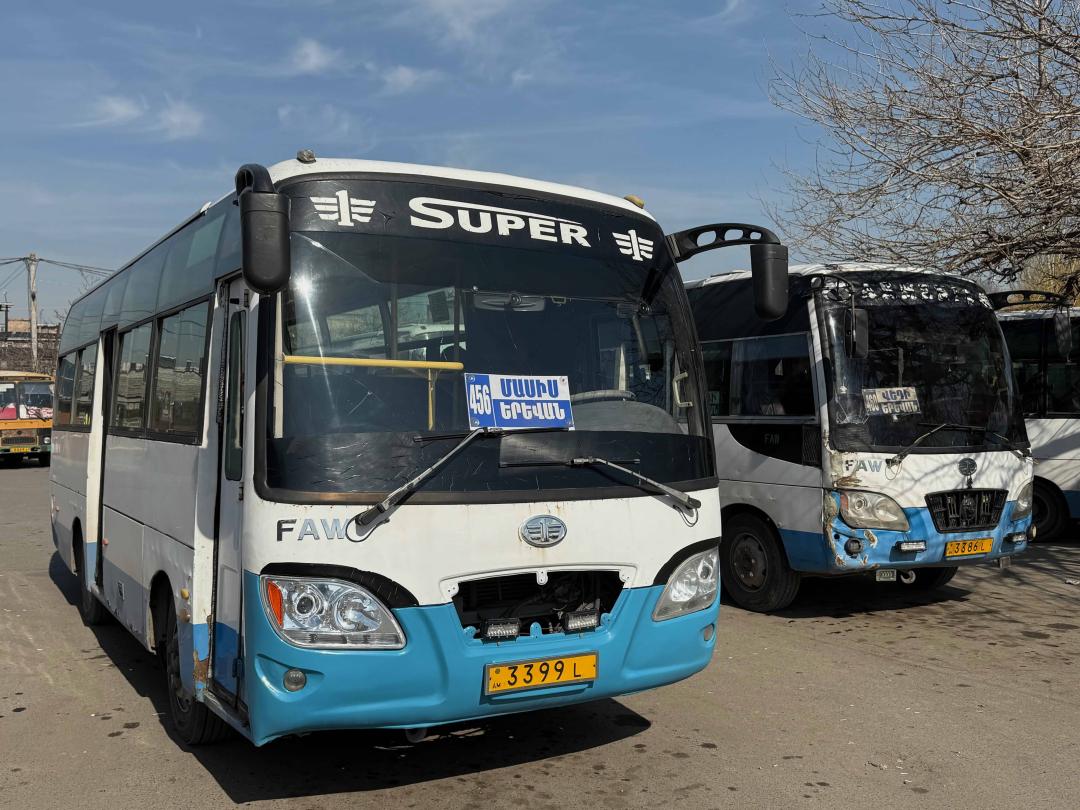
It's interesting that, in post-Soviet countries, airports have reached international standards, but bus and railway stations haven't. Yerevan is no exception. Almost nothing has changed here since the Soviet era. Right from here, the Chinese RAW buses depart for the regions of Armenia. The station is filled with the aromas of cooking oil, coffee, and gasoline before noon, creating a blend that permeates the air. People wait for transportation at this location, which lacks benches, standing or sitting on the wall next to the pool, which is devoid of water. While waiting, people are exhausted by the heat in summer and by the cold in winter. A driver sits on a busted tire and wipes the engine oil from his fingers, a foreign tourist with a backpack tries to find out from a coffee vendor which bus goes to Karabakh. "No, no Karabakh," a local woman says, trying to explain to him in English that buses from Yerevan no longer go to Karabakh. Then she adds with a sarcastic laugh: “He decided to go to Baku. Doesn’t he know that Armenian vehicles can’t go to Karabakh anymore?” “Grazie, spasibo,” the foreigner tries to thank the woman in an understandable language.
Thus, one of the Chinese buses departs for Masis, 14 km from the capital, Yerevan, where about 15,000 Karabakh Armenians live (the total population is 25,000). The bus is always full. Those who have a seat are scrolling on their phones. Those who are standing hold on to the yellow bars. They look out the dirty windows. One of the passengers standing is a heavy-set elderly man with a mustache. He is wheezing. It is noticeable how difficult it is for him to stand. “Come, sit down,” a teenage girl says in Karabakh dialect, giving up her seat. The presence of many Karabakh Armenians on the bus gives them a sense of security and allows them to speak their own dialect freely. In Armenia, they are usually uncomfortable speaking their dialect. After incidents of bullying, they have become more cautious.
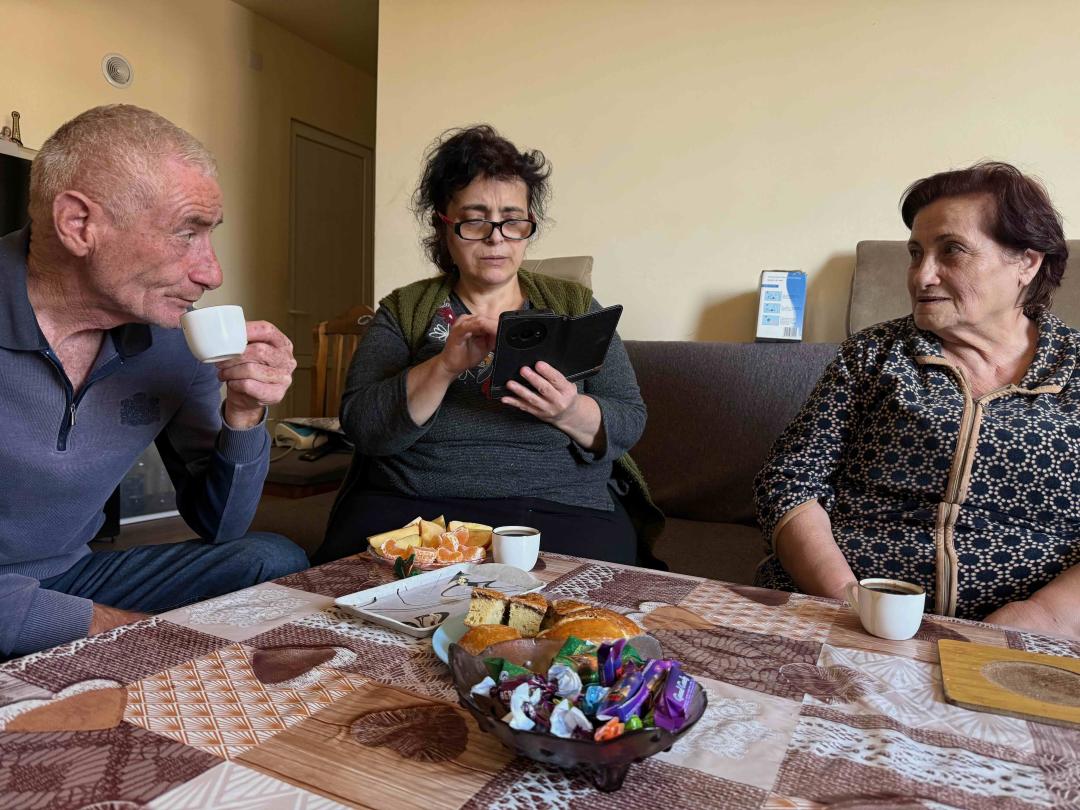
"I've been at the hospital in Yerevan; I have vein thrombosis. I'm dying of pain. The doctor says your arteries are closing. Last month, I also took my wife to the hospital because she has a problem with her eyes, and she's been a teacher her whole life. After eye surgery, she can no longer see in one eye, but that's just how life is. Now, we’re going to Masis, then to the village of Ranchpar. There are many Karabakh Armenians in that village, and I would say it's mostly them. You know, it's right next to the Turkish border, and when the mullah sings in the morning, we hear it. Our relative has lent us his house; they live in Moscow. It’s a very damp house, but we have no other place to live. The government is offering 6 million drams to buy a house, but you can't even buy a barn with that amount of money, and in our case, it's completely impossible, since it's just me and my wife, and we're both pensioners with poor health; what can we do with that money? A benefactor from America has been providing us with food for a long time. "He purchased six chickens for each Karabakh family. He also bought firewood. That's how we survive, as best we can," the mustachioed man says, sharing his difficulties.
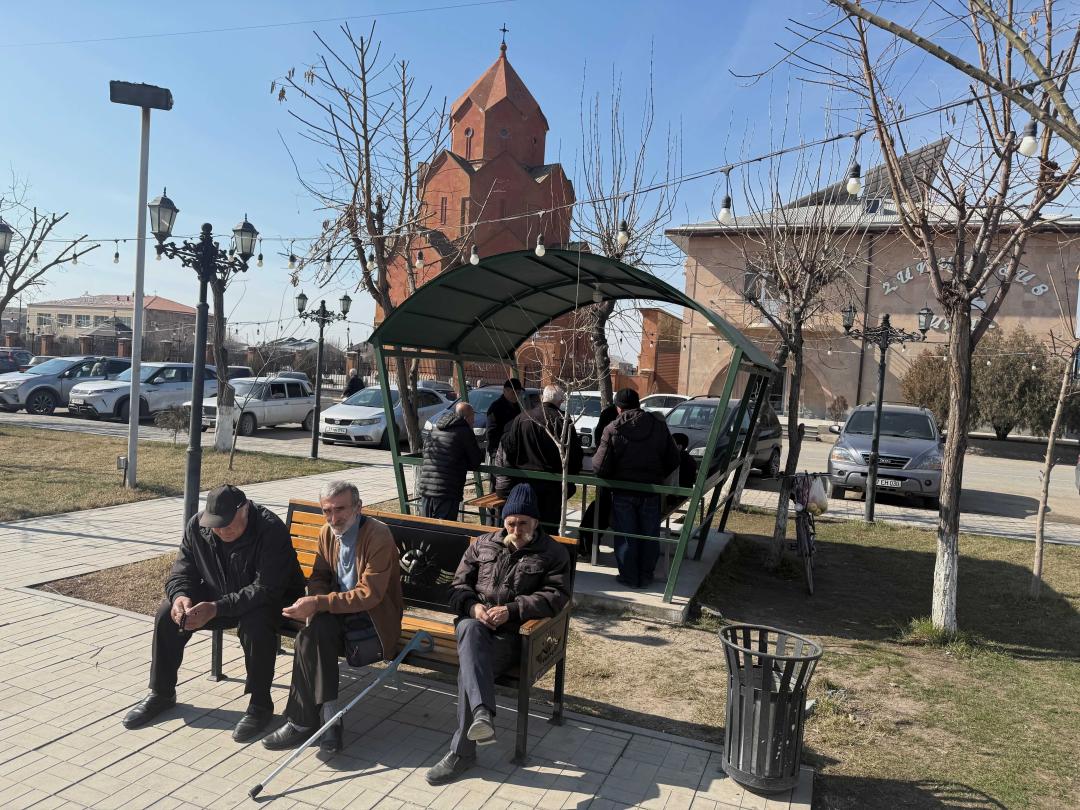
Every day, in the city center of Masis, the Armenians of Nagorno-Karabakh gather and play backgammon, cards, chess, and dominoes. The sound of warplanes is heard loudly in the sky. “These are flight tests of Russian pilots”, says a man playing dominoes, “It's like this every day, we can't sleep, but we have already adapted,” he adds.
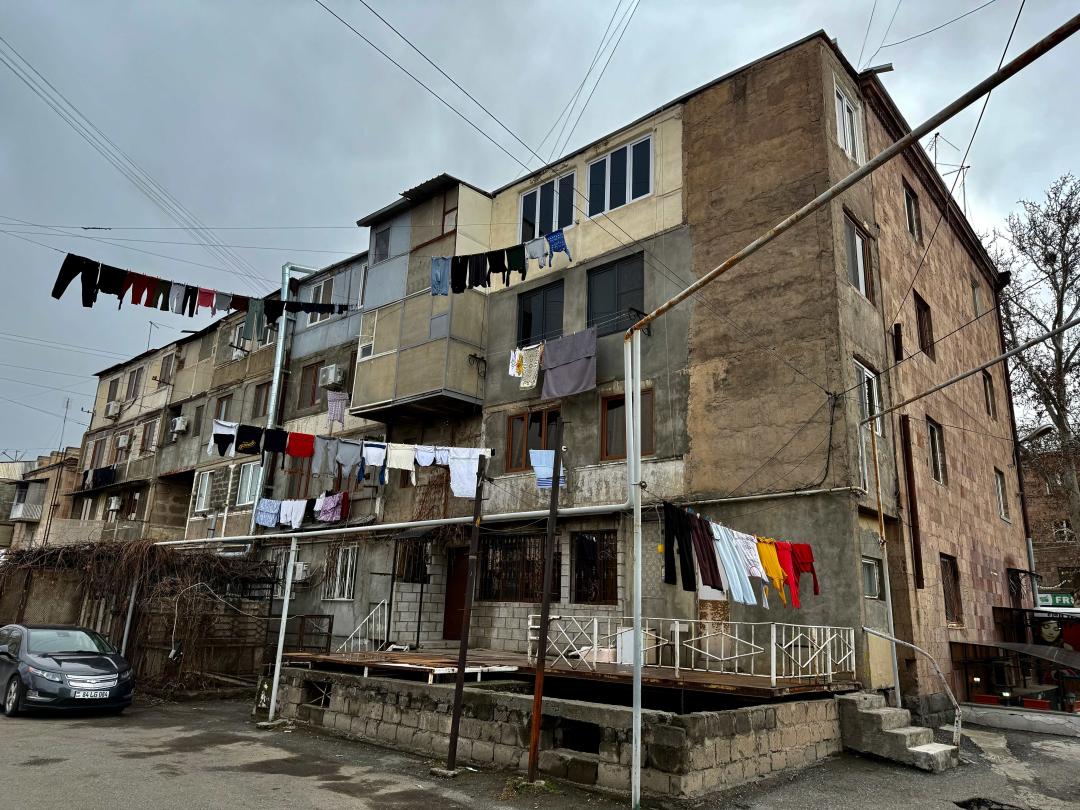
When Elada's family moved to Masis because of the Nagorno-Karabakh exodus in 2023, the municipality settled them with other families in an abandoned kindergarten building, but the building was dilapidated and they were relocated to another building, which also cannot be considered well-maintained, where she lives with her husband, mother, and son. The family is not going to accept Armenian citizenship, which is a mandatory condition for becoming a beneficiary of the housing program. They say that everything is uncertain, and they are still waiting. “How can I build a house at this age? I'd rather knit socks and spend the day like this,” says Elada's mother, Mrs. Nelly. “We don’t know what to do, we have no place to emigrate, nor do we feel comfortable here. It hurts when locals point out that we are from Nagorno-Karabakh, aren’t we Armenians, aren’t we the same nation? I went to buy vegetables, and the seller scolded me while I was speaking the Karabakh dialect, saying, ‘Speak our language.’ When they attack me like that, I say to myself, it’s better to speak Russian, so they understand nothing. Many of my relatives emigrated to Russia, but they have been living there without documents for several months. There is nothing in Russia either. My daughter, who also lives in Russia, gave birth there, but says she has to pay for everything, and that life is expensive, especially since the war in Ukraine has made everything even more difficult. I've basically lived my whole life as a refugee, from Baku to Karabakh, where we lived in the sanitary and epidemiological station dormitory for many years, until I got married and moved to Karabulakh (a village in Nagorno-Karabakh), and now in this dilapidated building in Armenia,” says Elada.
Elada lived in Baku for many years, and she says she misses Baku, its boulevards, and streets. “For me, it’s also kind of motherland, you know. Even though my father was killed in there, but I miss it very much, but much more, of course, I miss my native Karabakh. My heart breaks; there’s not a single day that goes by that we don’t remember Karabakh,” she says.
When the conversation turns to returning to Nagorno-Karabakh and establishing peace with Azerbaijan, disputes arise in the family: “I don't know, maybe a circumstance will occur that will allow us to return,” says Elada, and her husband, Karo, immediately becomes enraged. “Centuries will have to pass before we can reconcile; that's impossible now. Perhaps it was possible before, but now the wounds are too fresh, and nothing can be done about it,” he says.
Etchmiadzin: Another city with Karabakh refugees?
Like in Masis, in Echmiadzin, there are a lot of Karabakh Armenians. It is clear that most of them live in communities near the capital, Yerevan.
Etchmiadzin, that's what everyone calls Armenia's fifth-largest city, named after the Etchmiadzin Cathedral, the mother church of the Armenian Apostolic Church, although the official name is Vagharshapat. On a gloomy Sunday, a large group of Asians can be seen walking around the church, taking photos. Meanwhile, a teacher is giving a tour to schoolchildren. The tour guides the students through the history of the church in English, Russian, French (with a touch of Armenian), and the Karabakh dialect. There is a memorial complex for the First Karabakh War in the central square, where a woman is walking with a little boy. She urges the little one in the Karabakh dialect to straighten his hat, when someone else asks the boy where he is from. “Karabakh”, the boy replies. “So, when will you go back to Karabakh?”, he was asked, bringing his mother to tears. “It's cold, Ara, let me fix your hat”, says boy’s mother.
Armen, a taxi driver from Hadrut, Nagorno-Karabakh, says he pays 150,000 drams ($397) for rent, and expresses concern that with the war in Iran, locals will raise prices even more if Iranians start coming to Armenia, as it happened during the 12-Day War in June 2025. “You know, everyone wants to have an apartment here because of jobs, everyone wants to live close to the capital, but there aren't many apartments left in the city anymore, there's not much option for us,” says Armen. As displaced Karabakh Armenians continue to face housing and employment challenges, the Armenian government announces budgetary increases in housing programs.
“We've seen a sharp increase in the number of certificates (to obtain a house) received, and as of February 1, 4,404 families had already received certificates, and about 2,000 families had already sold their certificates, meaning 2,000 apartments had been purchased. This is very important," stated Minister of Labor and Social Affairs Arsen Torosyan on February 4. The Ministry Spokesperson Nver Kostanyan also provided details about the social needs of Nagorno-Karabakh Armenians.
The speaker clarified that the housing program, with a budget of approximately 2 billion dollars, is one of the most significant initiatives in the sector and is functioning properly. In addition, the 30,000 Dram ($79) support measure continues, which benefits 44,000 people, and another 6,000 needy families are included in the framework of the emergency assistance program. Kostanyan also reported that new programs aimed at long-term rental compensation and self-employment promotion will be launched in the near future, which testifies to the consistency of state care. About 25,000 people displaced from Karabakh currently have formal employment.
In general, the state’s policy in overcoming social problems and poverty is clear: there is only one way out: work. The state encourages work as the main way out of a difficult life situation and consistently implements a policy aimed at ensuring stable and long-term employment of citizens. “The Ministry of Social Affairs continuously meets with our compatriots in Karabakh, in various formats, is fully informed about the issues they are concerned about, and the policies implemented by the state are developed taking into account the needs and observations of our compatriots,” Kostanyan posted on his Facebook page on February 8.
In 2025, Armenia received a $250 million loan from the Asian Development Bank to continue implementing the state program to provide housing for internally displaced persons from Nagorno-Karabakh. The loan was provided to Armenia for 27 years, including a 10-year grace period. The interest rate on the loan is floating. The principal is repayable in 34 equal, semi-annual installments between December 15, 2035, and June 15, 2052.
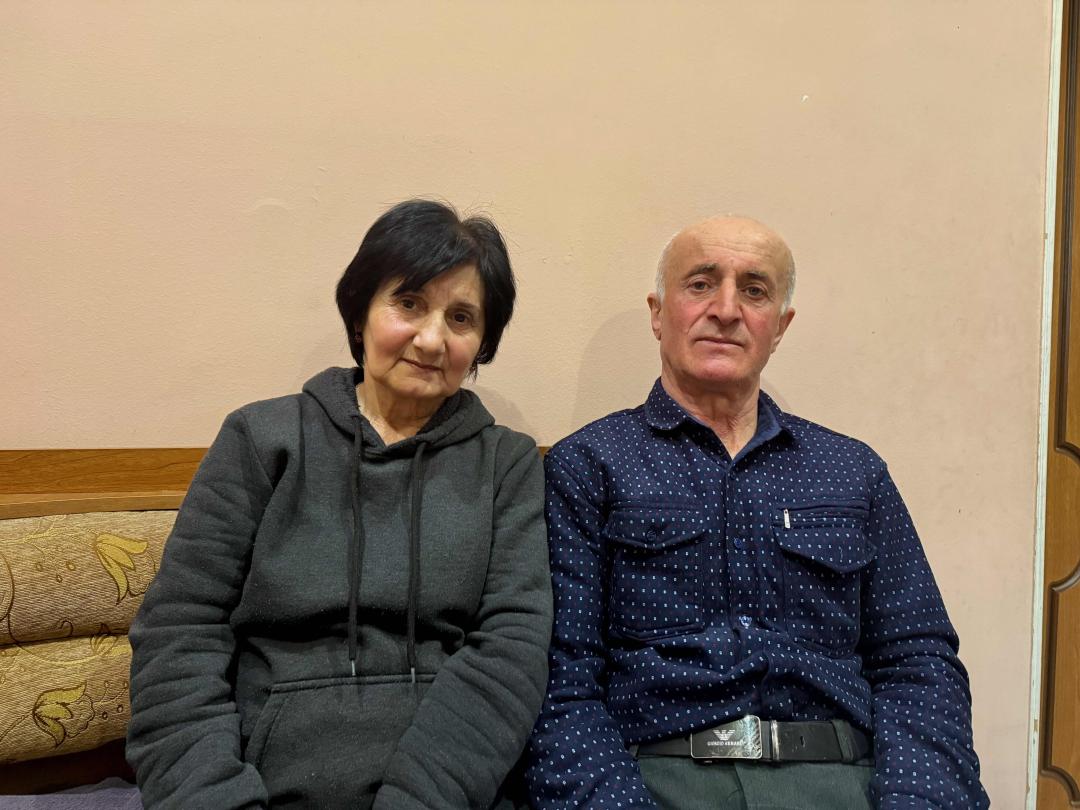
Perhaps the most concerning issue for Karabakh Armenians is the housing issue, but this is not just about four walls. If you inquire about it, they will primarily mention the housing issue, which is truly vital. However, it gives the impression that something is tormenting them that they cannot explain, nor do they understand themselves. It's as if it were a disease that causes pain, but the diagnosis is unknown. “Nothing has changed in our lives since 2023. I had a huge house in Taghavard, but I would even live in a slum if I were given such an opportunity to return to my village. My wife says the same thing. Many people think the same way when I talk to my compatriots”, says Lyova Arakelyan, a refugee from Nagorno-Karabakh, who now lives in Echmiadzin in a village house he rents.
“Here is my granddaughter, Lili, her dad was killed in 2023 war next to his native village, Chanakhchi. She is very shy and hardly leaves her room. Many people think that she is not Armenian because of her blue eyes and reddish-gold hair, but she speaks excellent Armenian at school, and you can't even tell that she is from Nagorno-Karabakh; at home, we speak our dialect. Both children and we adults are traumatized. It is difficult to communicate with locals here; it is an unfamiliar environment. Today, I saw someone was moving mattresses in our neighborhood. I immediately guessed that she was also from Karabakh, only we move from one house to another, move things. That's how I greeted her, she began to tell her story, and I mine. We all suffer from the same pain,” says Lyova’s wife, Mrs. Arakelyan.
“I just turned 70, but I continue to work. I grow trees on a compatriot's property near Echmiadzin. You see, I'm a forester; I've been beekeeping and farming my whole life. Every time I touch a twig, I remember my garden and home in Taghavard, our green forests. There, violets sprouted from dry oak leaves, so much so that even a man wants to pick a bouquet, like an enchanted girl. Who doesn't want to return home, to the graves of their ancestors? That's my only desire,” Lyova adds to his wife.
Contributed by Marut Vanyan