
For Moscow and Tehran, Eurasian Connectivity Remains Central
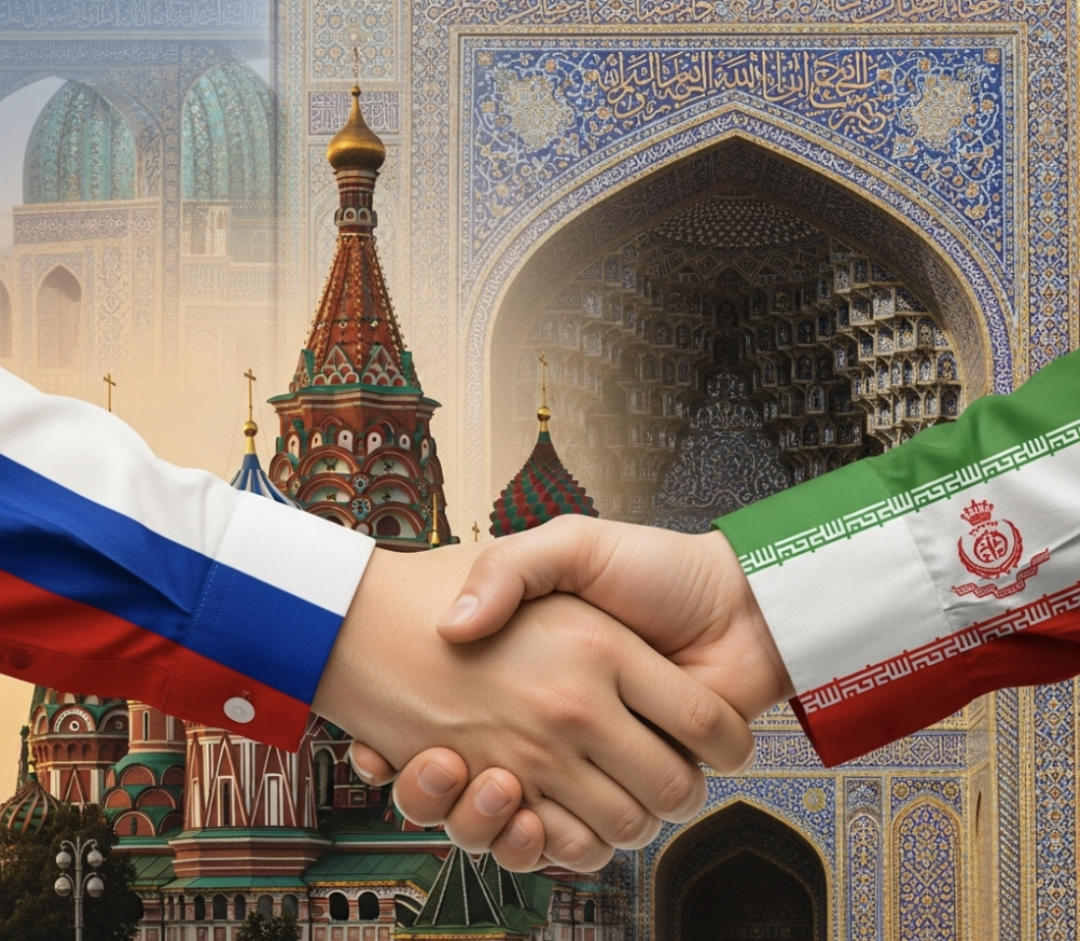
Despite the recent escalation between Israel, the United States, and Iran, Tehran's cooperation with Russia on the development of the North-South corridor is expected to continue.
Since the 2022 invasion of Ukraine prompted heavy Western sanctions on Moscow, Russo-Iranian relations have grown increasingly aligned. One of the most important projects underscoring Russia’s pivot to the Middle East is the International North-South Transport Corridor (INSTC). The project allows Russia to alleviate pressure from the West, and its successful completion would signal Russia’s turn toward the Global South. More specifically, the corridor will create a land route from Russia to Iran's southern ports, including the crucial hub of Bandar Abbas. The route is expected to transform global logistics, reducing delivery times by 30-40 percent compared to traditional sea routes through the Suez Canal.
Progress on the INSTC has been evident. An agreement on the project's joint implementation was reached between Moscow and Tehran in 2023. The immediate goal is to complete the final section of the corridor's western railway branch, which runs through Azerbaijan along the Caspian Sea's western coast. This incomplete railway line lies between the cities of Rasht and Astara in northern Iran. Of the project's total cost of $1.6 billion, $1.3 billion is a Russian loan, with the remaining $300 million pledged by the Iranian side.
The plan includes constructing 18 tunnels; given the mountainous terrain, the work requires special engineering skills, which drives up the project's cost. The track gauge has been another challenge. The two sides decided the railway will combine two standards—European (1435 mm) and Russian (1520 mm)—to increase the project's effectiveness.
Both Russia and Iran have been actively promoting the INSTC. Just before the recent Israeli-American attacks on Iran, Russian Deputy Prime Minister Vitaly Savelyev stated at the St. Petersburg International Economic Forum that work on the Rasht-Astara section had not stopped. Furthermore, according to Russian Transport Minister Roman Starovoit, Iran and Russia have already carried out engineering and geological surveys on the 162-kilometer section, which will be followed by actual construction.
Earlier this year, during the III Caspian Economic Forum in Tehran, representatives of the Caspian Five (Russia, Azerbaijan, Kazakhstan, Iran, and Turkmenistan) discussed prospects for developing Eurasian connectivity. Among the projects reviewed were the Trans-Caspian International Transport Corridor (TITC), the INSTC, and the Caspian Sea-Persian Gulf route.
The Iranian side has estimated that the Rasht-Astara railway line can be completed by the end of 2029. Until then, products will continue to be transported between Rasht and Astara by road, which slows logistics and increases costs. Geopolitical factors could also complicate progress. Should the confrontation between Iran and Israel continue, further delays to the INSTC’s completion are expected. Another challenge is the existing sanctions regime imposed on the Islamic Republic.
When completed, the Rasht-Astara railway will ensure the continuous movement of goods from Russia through Iran to the ports of the Persian Gulf, the Indian Ocean, and potentially even the eastern coast of Africa. By 2030, freight traffic along the corridor could amount to 25 to 32 million tons annually. As a further boost, an agreement creating a free trade zone between Tehran and the Eurasian Economic Union (EAEU) came into force in May. With Armenia (an EAEU member) as a neighbor, Iran is now hoping for greater commercial ties with the bloc.
All policy moves made by Russia and Iran over the past months indicate that the two countries will continue their work on the INSTC. Regardless of how Iran’s nuclear saga or Russia's own relations with the United States evolve, Moscow and Tehran share a fundamental interest in Eurasian connectivity. Both seek to minimize the effects of Western sanctions and leverage their geography—the INSTC runs along the same routes actively used by merchants in ancient and medieval times to link the Middle East with the Eurasian steppes and the European continent.
In short, recent attacks on Iran’s nuclear and military infrastructure have highlighted the vulnerability of Russia-Iran cooperation. Although the INSTC is one of the areas that could be most impacted, Moscow and Tehran seem intent on pushing the project forward.
Emil Avdaliani is a research fellow at the Turan Research Center and a professor of international relations at the European University in Tbilisi, Georgia. His research focuses on the history of silk roads and the interests of great powers in the Middle East and the Caucasus.